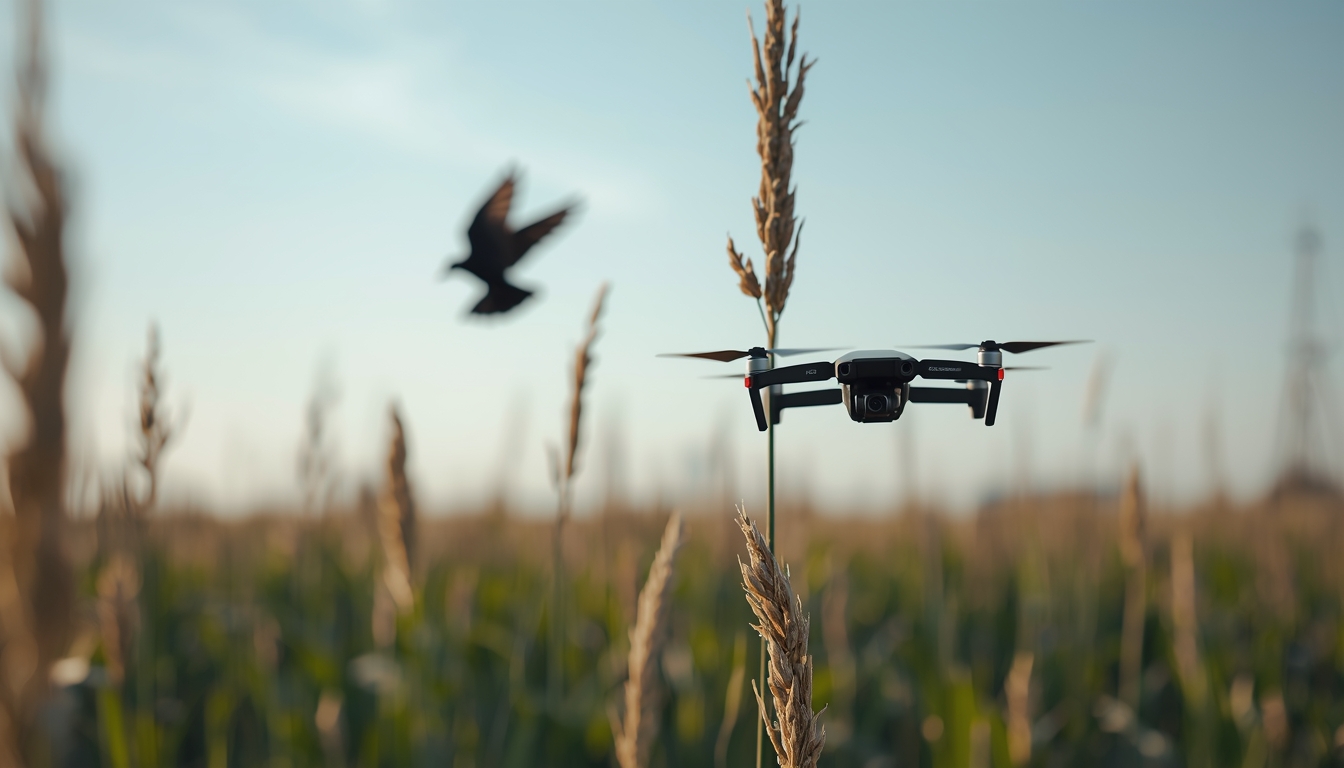

Using what they called the m-waypoint algorithm, the team programmed a UAV to fly calculated paths around a flock, applying just enough pressure to influence direction-much like a natural predator would. Rather than panicking or scattering, the birds reacted collectively, adjusting their flight paths in predictable ways.
The key breakthrough wasn’t force or speed. It was behavioral intelligence.
By studying how birds respond to threats, the researchers designed flight paths that guided flocks away from danger zones such as airports. The drone didn’t chase randomly. It positioned itself strategically along the flock’s boundary, steering birds away while maintaining cohesion. Field tests near KAIST’s campus showed the system successfully redirecting species like egrets and loons.
This research matters because bird strikes are a serious global problem. Worldwide, wildlife collisions cost the aviation industry over $1.2 billion annually, destroy aircraft, injure passengers, and occasionally lead to catastrophic incidents. Traditional methods-falconry, loud cannons, habitat removal-have helped, but birds are highly adaptable. Airports are now looking toward “smart systems” that combine detection, automation, and behavior-based deterrence.
The researchers believe this algorithm is only the first step. Future systems could integrate bird detection, ranging, and fully automated drone deployment-creating responsive, real-time bird control.
But here’s the bigger question:
Would This Work in Agriculture?
If an autonomous drone can herd birds away from runways…
could the same logic protect crop fields, dairies, feedlots, and food facilities?
The parallels are striking.
-
Farms face persistent bird pressure, not occasional flyovers
-
Damage comes from feeding, contamination, and disease risk
-
Birds quickly habituate to static deterrents like scarecrows or noise cannons
A behavior-based drone system could offer something agriculture has struggled to achieve: dynamic, adaptive bird control.
In crop fields, autonomous drones could:
-
Patrol at peak feeding times
-
Respond only when flocks are detected
-
Apply pressure from angles proven to redirect flight paths
In dairies and feedlots, drones could:
-
Break up loafing behavior over feed bunks
-
Reduce fecal contamination
-
Lower the risk of disease spread, including avian influenza
Unlike constant noise or lethal control, herding doesn’t try to eliminate birds-it simply makes an area undesirable, repeatedly and intelligently.
Farms Offer What Airports Don’t: Food and Water
One of the biggest differences between airports and agricultural environments is simple but critical: farms provide exactly what birds are looking for.
Airports are largely open, sterile spaces. There’s limited food, minimal water, and constant disturbance from aircraft. Birds may pass through, but they aren’t motivated to stay. The goal of bird control at airports is often short-term displacement-move birds out of restricted airspace and the problem is largely solved.
Farms are the opposite. 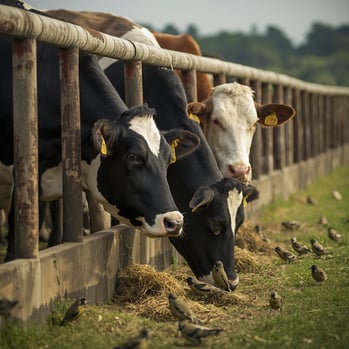
Crop fields, dairies, feedlots, and processing facilities offer abundant food sources, reliable water, shelter, and predictable routines. Grain, silage, animal feed, spilled commodities, irrigation systems, ponds, and shade structures all signal safety and opportunity to birds. Once birds locate these resources, they don’t just visit-they establish patterns.
This creates a fundamental challenge for any deterrent system, including autonomous drones. Herding a flock away once is not enough if the birds know food and water are waiting when the pressure stops. Without addressing attraction, birds will return repeatedly, often within hours.
That’s why bird control in agriculture can’t rely on movement alone. Drone herding would need to be paired with attractant management-reducing access to feed, controlling standing water, adjusting harvest and feeding practices, and modifying habitats that support roosting and loafing.
In this context, drones don’t replace traditional bird management-they enhance it. They become a behavioral enforcement tool, reinforcing the message that despite the presence of food and water, the area is no longer comfortable or predictable.
In agriculture, success isn’t about clearing the airspace once. It’s about breaking the connection between resources and safety-and that’s a much higher bar than what airports face.
The Challenge Ahead
Agriculture isn’t an airport. Fields are larger. Pressure is seasonal. Birds return daily. That means any drone-based system would need to be:
-
Automated
-
Energy-efficient
-
Integrated with detection systems
-
Designed to prevent habituation
But the science suggests the concept is sound.
Birds don’t just react-they calculate. And when technology learns how birds think, control becomes less about force and more about influence.
The real question isn’t if drone herding could work on farms.
It’s how soon the technology will be adapted for agricultural reality.