Poultry Farms
Bird Flu
Avian Influenza
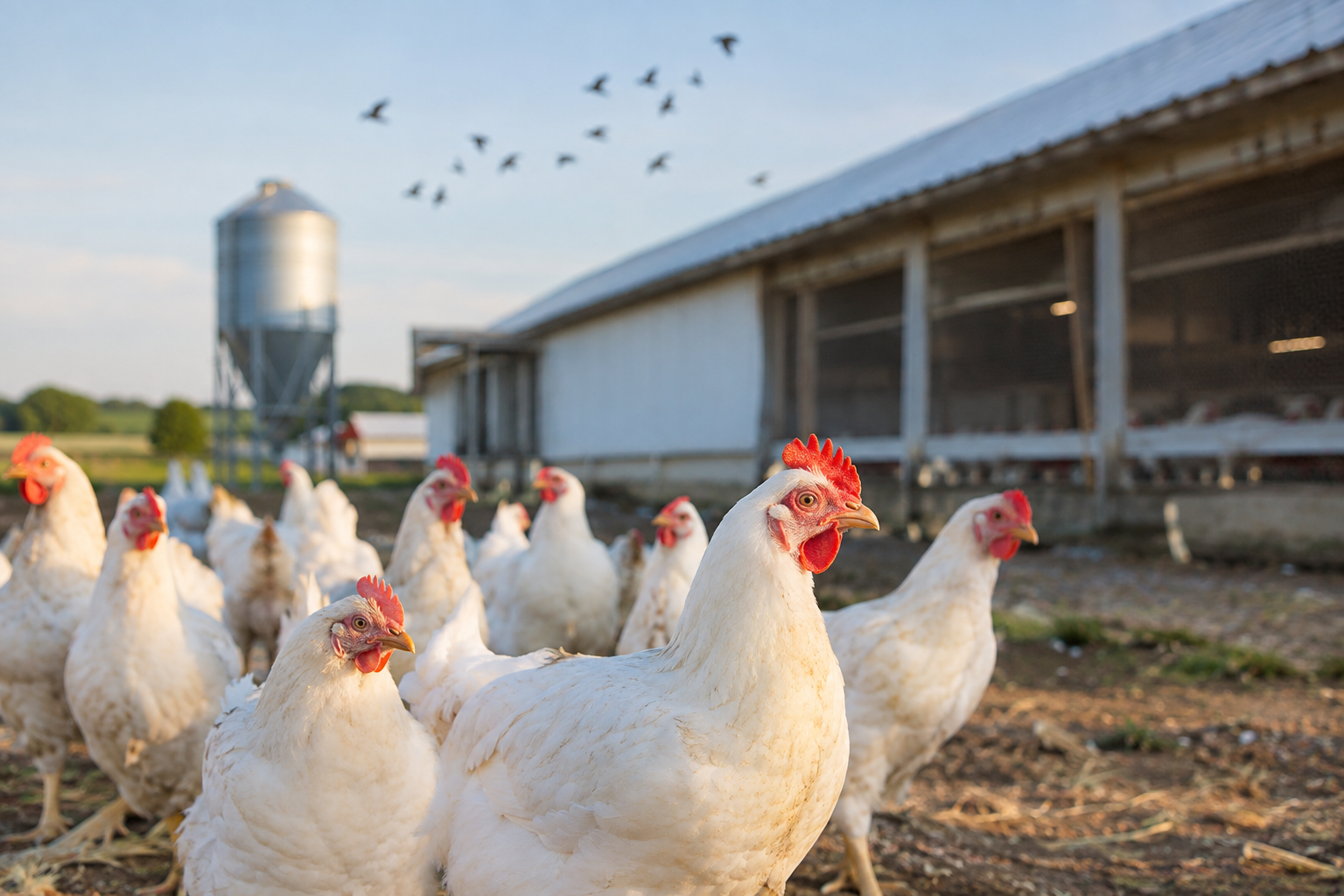

H5N1 bird flu remains an active threat to poultry producers across the United States.
Highly pathogenic avian influenza, or HPAI, continues to be detected in commercial and backyard poultry operations, making biosecurity one of the most important tools poultry producers have to protect their flocks.
For poultry farmers, the question isn't whether bird flu is still a concern.
It is.
The question is: What can you do to reduce the risk of HPAI entering your operation?
USDA describes HPAI as an ongoing outbreak affecting both commercial and backyard poultry flocks in the United States.
The virus has affected different types of poultry operations, including egg-laying facilities, turkey farms, duck operations and backyard flocks.
Recent outbreaks have demonstrated just how quickly the consequences can become significant when HPAI enters a poultry operation.
A single detection can result in the loss of a large number of birds and trigger movement restrictions, response measures and extensive cleaning and biosecurity requirements.
For producers, prevention is far less disruptive than dealing with an infected flock.
Poultry operations can contain exactly the things that attract birds:
Food. Water. Shelter. Warm buildings.
Wild birds can be attracted to areas around poultry facilities, particularly where feed spills, standing water or other resources are available.
That's why biosecurity isn't just about what happens inside the poultry house.
It's also about what is happening around it.
USDA specifically identifies biosecurity as a key tool for protecting poultry flocks from HPAI.
Wild birds are an important part of the HPAI story.
USDA maintains surveillance programs that monitor wild birds for HPAI because wild birds can carry avian influenza viruses and move them across geographic areas.
That doesn't mean every wild bird around a poultry farm is infected.
It means poultry producers should avoid creating unnecessary opportunities for wild birds to interact with their flocks, feed, water and equipment.
And that's especially important when bird activity increases around an operation.
Walk outside your poultry houses.
Don't just look at your flock.
Look at everything surrounding it.
Where are wild birds landing?
Where are they feeding?
Where are they drinking?
Where are they roosting?
Are they getting into spilled feed?
Are they gathering around water?
Are droppings accumulating near entrances, equipment or other high-traffic areas?
These observations can reveal potential biosecurity weaknesses.
The goal isn't to eliminate every wild bird from the property.
The goal is to reduce unnecessary contact between wild birds and the poultry operation.
Wild birds aren't the only biosecurity concern.
People and equipment can also move contaminants.
A worker can walk through an area contaminated with bird droppings and then enter another area.
A vehicle can move between farms.
Equipment can be shared.
Boots can carry material from one location to another.
USDA's biosecurity program therefore emphasizes measures designed to prevent disease from being introduced and spread between poultry premises. USDA offers voluntary biosecurity assessments for unaffected operations and requires biosecurity audits for certain affected operations and operations located in control areas.
Biosecurity has to follow the entire movement of people, animals and equipment.
Poultry producers shouldn't look at bird control as a replacement for biosecurity.
It's one part of the larger picture.
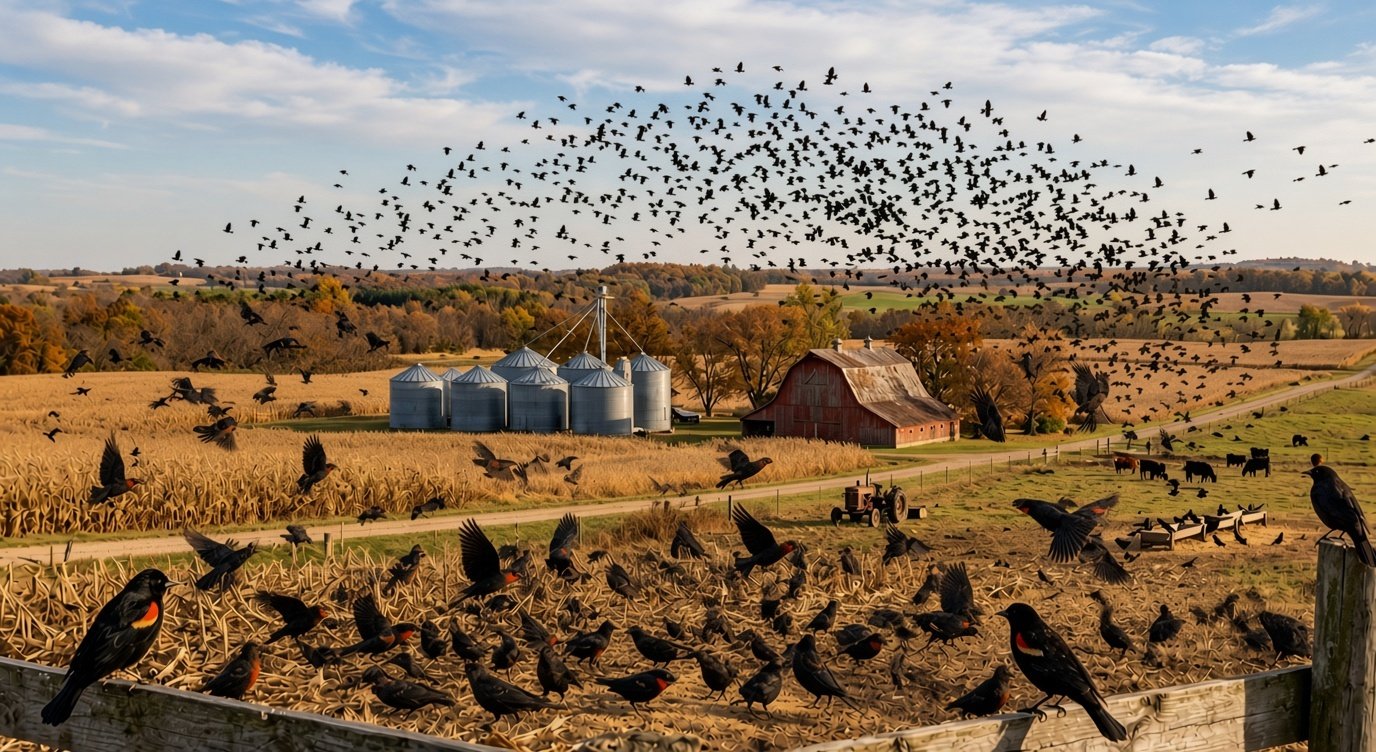
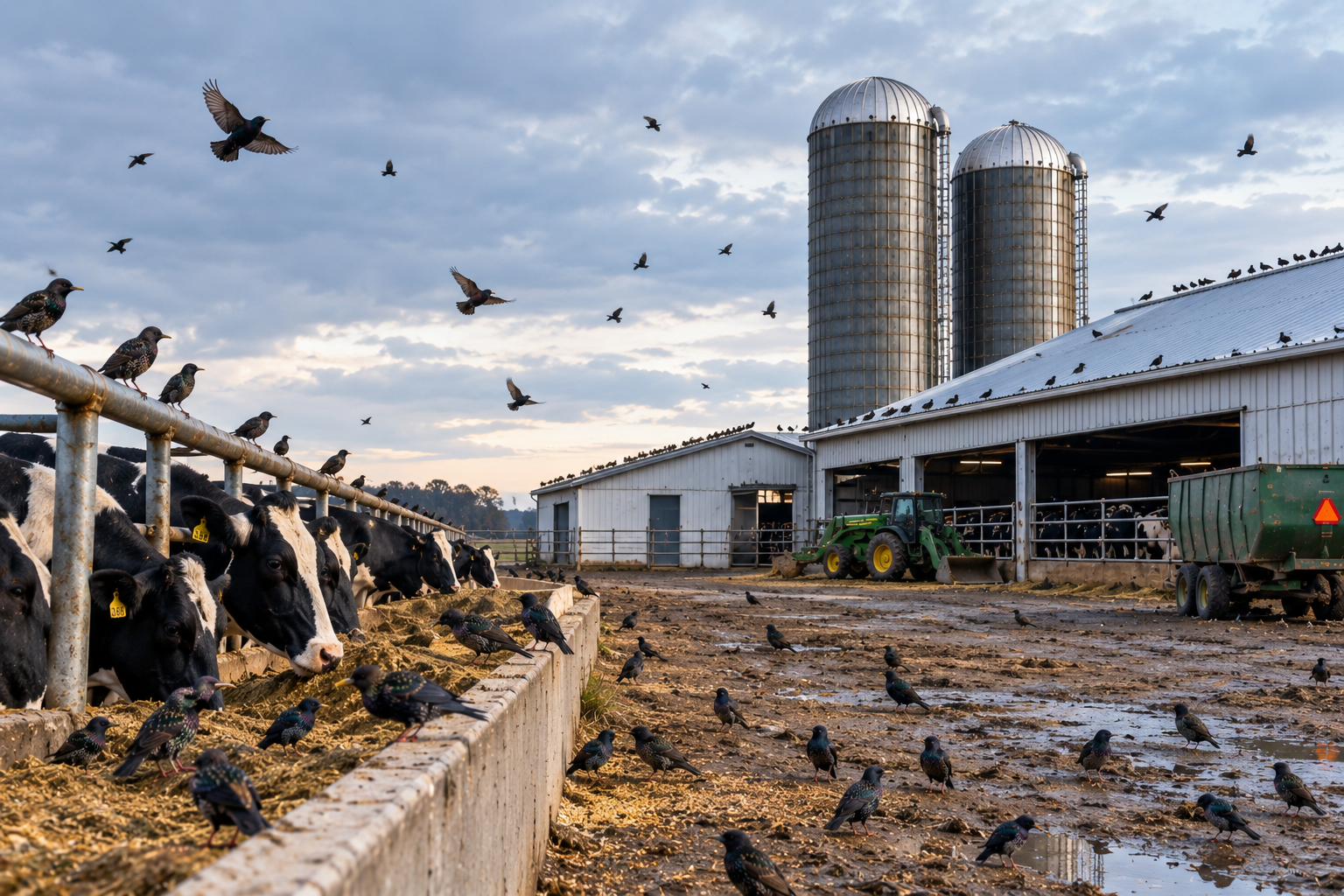
If large numbers of starlings, blackbirds, grackles, pigeons or other problem birds are repeatedly gathering around a poultry operation, producers should determine what is attracting them and take appropriate steps to manage that activity.
Reducing unnecessary bird activity around feed, water and poultry facilities can help reduce the opportunities for unwanted wildlife interactions.
For professional bird-management situations, Avitrol can be used as part of a bird-control program when appropriate and when applied according to the product label and applicable regulations.
The objective isn't to control every wild bird.
It's to address problem bird activity around areas where poultry producers have legitimate biosecurity and operational concerns.
Start with the basics.
Walk the entire property and look for areas where wild birds are congregating.
Look for spilled feed, grain, waste or other materials attracting birds.
Standing water can attract wild birds.
Identify puddles, drainage problems and other water sources near poultry areas.
Pay attention to areas where birds are landing, roosting or accumulating droppings.
Make sure workers understand how clothing, footwear, equipment and vehicles can contribute to disease movement.
Clean and disinfect equipment when appropriate, particularly equipment moving between poultry areas or premises.
Know what normal looks like for your birds.
Sudden changes in mortality, feed or water consumption, egg production, behavior or overall flock health should be taken seriously and reported through the appropriate veterinary and animal-health channels.
USDA is currently offering free, voluntary biosecurity assessments to eligible poultry operations that are not affected by HPAI.
The Wildlife Biosecurity Assessment and Biosecurity Incentive-Focused Assessment are designed to identify specific vulnerabilities on a farm and provide producers with actionable recommendations.
USDA says it can also provide up to 75% cost-sharing for correcting the highest-risk biosecurity concerns identified through those assessments.
That's an important resource for poultry producers who want another set of eyes on their operation.
HPAI isn't something poultry producers want to discover after it has entered the flock.
An outbreak can mean:
Bird losses.
Operational disruption.
Movement restrictions.
Depopulation.
Extensive cleaning and disinfection.
And months of additional work to restore normal operations.
USDA's response program includes specific requirements for affected commercial operations, including biosecurity audits before restocking in situations where producers want to remain eligible for federal indemnity.
That's why prevention matters.
The biggest mistake a poultry producer can make is treating biosecurity as something that starts after an outbreak.
It starts before one.
Look at the farm today.
Look at the birds around the farm.
Look at the feed.
Look at the water.
Look at the equipment.
Look at the traffic moving in and out.
Then ask:
Where is my greatest opportunity for HPAI to enter this operation?
That's where your attention should go first.
H5N1 remains an ongoing threat to U.S. poultry operations.
USDA continues to emphasize that biosecurity is the key defense against HPAI, and the agency continues providing assessments, audits and other resources to help poultry producers strengthen their operations.
You can't control every wild bird.
You can't control where migrating birds fly.
But you can control your farm's biosecurity practices.
You can identify where birds are gathering.
You can address feed and water sources that attract them.
You can control the movement of people and equipment.
And you can build a stronger barrier between your poultry flock and the outside environment.
When H5N1 is still circulating, the best time to strengthen your biosecurity isn't after the virus arrives.
It's now.