Poultry Farms
Bird Flu
Avian Influenza
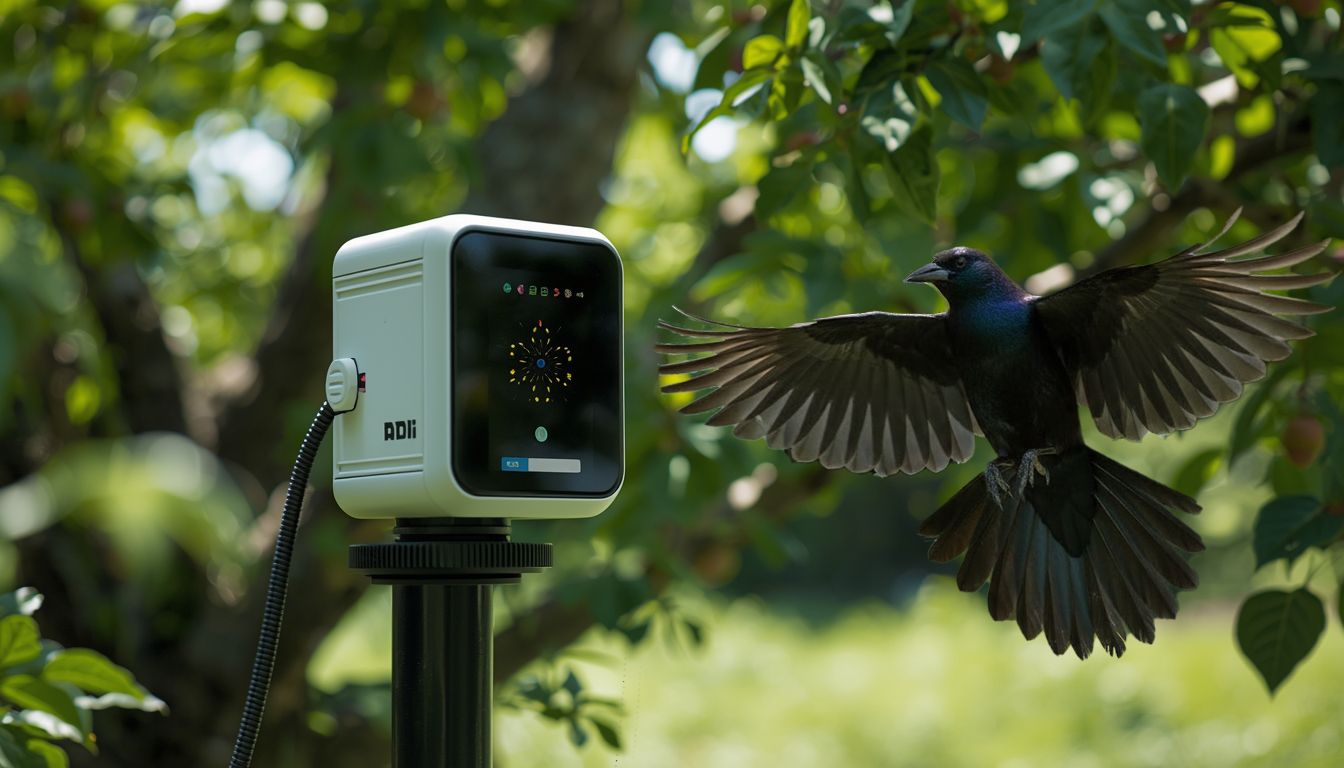

Robots got headlines. Drones got demos. Sprayers got smarter.
Meanwhile, pest monitoring-the foundation of every treatment decision-was still being handled by people driving from field to field, opening traps, and counting bugs by hand.
That disconnect is finally breaking.
Automation and AI aren’t just improving pest monitoring. They’re redefining what “monitoring” even means.
Pest monitoring has always been essential-and painfully inefficient.
It depended on:
Long drives across massive growing regions
Seasonal labor willing to do repetitive, uncomfortable work
Weekly snapshots of data in a world that changes daily
I lived that reality. Hot days. Dusty roads. Trap after trap. Count, record, repeat.
The system worked just well enough to survive-but not well enough to excel. And when pest populations spiked between inspections, growers paid the price.
Some agricultural tasks are hard to automate. Pest monitoring isn’t one of them.
It’s predictable.
It’s repetitive.
It’s data-driven.
And it doesn’t require human judgment in the field-only at the decision-making level.
Add in labor shortages, heat exposure, and rising operational costs, and the question becomes obvious:
Why are we still doing this manually?
The real breakthrough isn’t automation itself-it’s frequency.
Weekly counts tell you what already happened.
Daily data tells you what’s about to happen.
That shift changes everything.
With autonomous traps collecting and transmitting data every day, pest monitoring becomes:
Continuous instead of periodic
Predictive instead of reactive
Strategic instead of routine
This is especially critical as traditional chemistries disappear and timing-sensitive tools take their place.
A new generation of ag-tech companies is attacking the problem from multiple angles.
Some use:
Imaging systems that visually identify insects
AI models trained to distinguish species and life stages
Sensors that detect insects by movement or wing patterns
Companies like FarmSense, Trapview, CropVue, Metos, Semios, RapidAIM, and scoutlabs aren’t just counting bugs-they’re creating decision engines.
The result? Alerts instead of assumptions. Trends instead of guesswork.
Automation doesn’t remove expertise-it amplifies it.
Growers and advisors gain:
Earlier warnings of population spikes
Better alignment between pest pressure and treatment timing
Reduced dependence on seasonal scouting labor
Fewer unnecessary applications
And perhaps most importantly: confidence.
When data is current, decisions are calmer, more deliberate, and far more effective.
Broad, calendar-based spraying is slowly losing relevance.
Automated monitoring enables:
Precision interventions
Reduced chemical volumes
Protection of beneficial insects
Lower off-target impact
This isn’t ideology-it’s efficiency. And efficiency is what sustainability actually looks like on the ground.
There was a time when I couldn’t imagine pest monitoring without boots on the ground and a clipboard in hand.
Now, after years of refinement, the technology has caught up-not to replace that experience, but to evolve it.
What used to require miles, hours, and manual counts can now happen automatically, accurately, and continuously.
That’s progress worth paying attention to.
Pest monitoring is no longer just a task.
It’s becoming a system.
A system that feeds better decisions.
A system that reduces risk.
A system that aligns economics, sustainability, and performance.
And as agriculture continues to modernize, this may be one of the quiet revolutions that ends up mattering the most.