Poultry Farms
Bird Flu
Avian Influenza

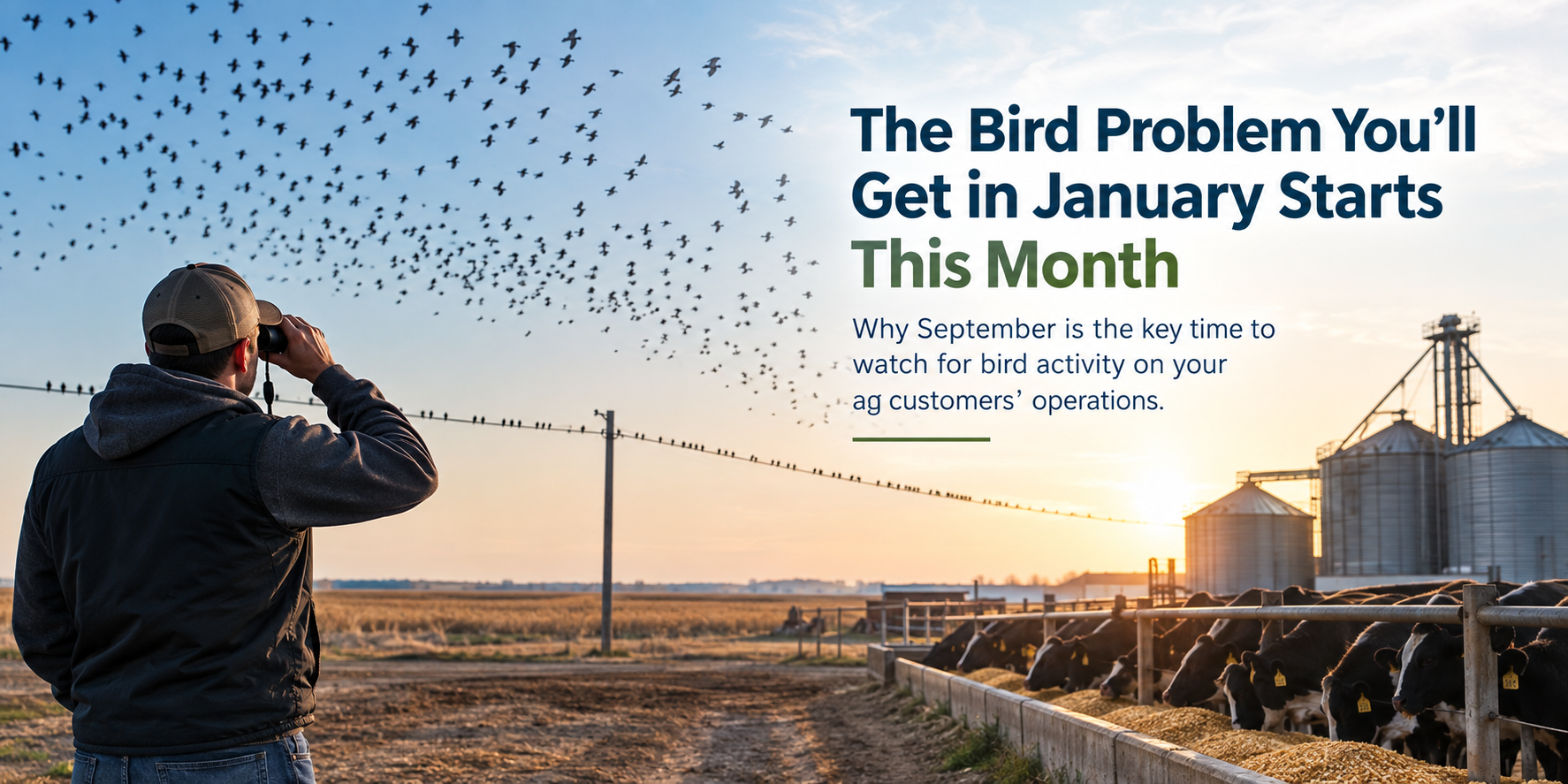
Fall migration doesn’t just bring cooler temperatures and changing leaves. It can bring massive flocks of hungry birds directly onto agricultural operations.
As summer turns to fall, birds begin looking for reliable sources of food, water, and shelter. Agricultural facilities can provide all three.
Feedlots have feed. Dairies have grain and water. Grain facilities have stored commodities. Harvested fields provide easy access to leftover crops.
And when one bird finds a dependable food source, hundreds, or even thousands, can follow.
For agricultural operators, knowing which birds to watch for and where they are most likely to show up can make a major difference in preventing a small nuisance from becoming a major management problem.
Here are some of the biggest pest birds to watch as fall approaches.
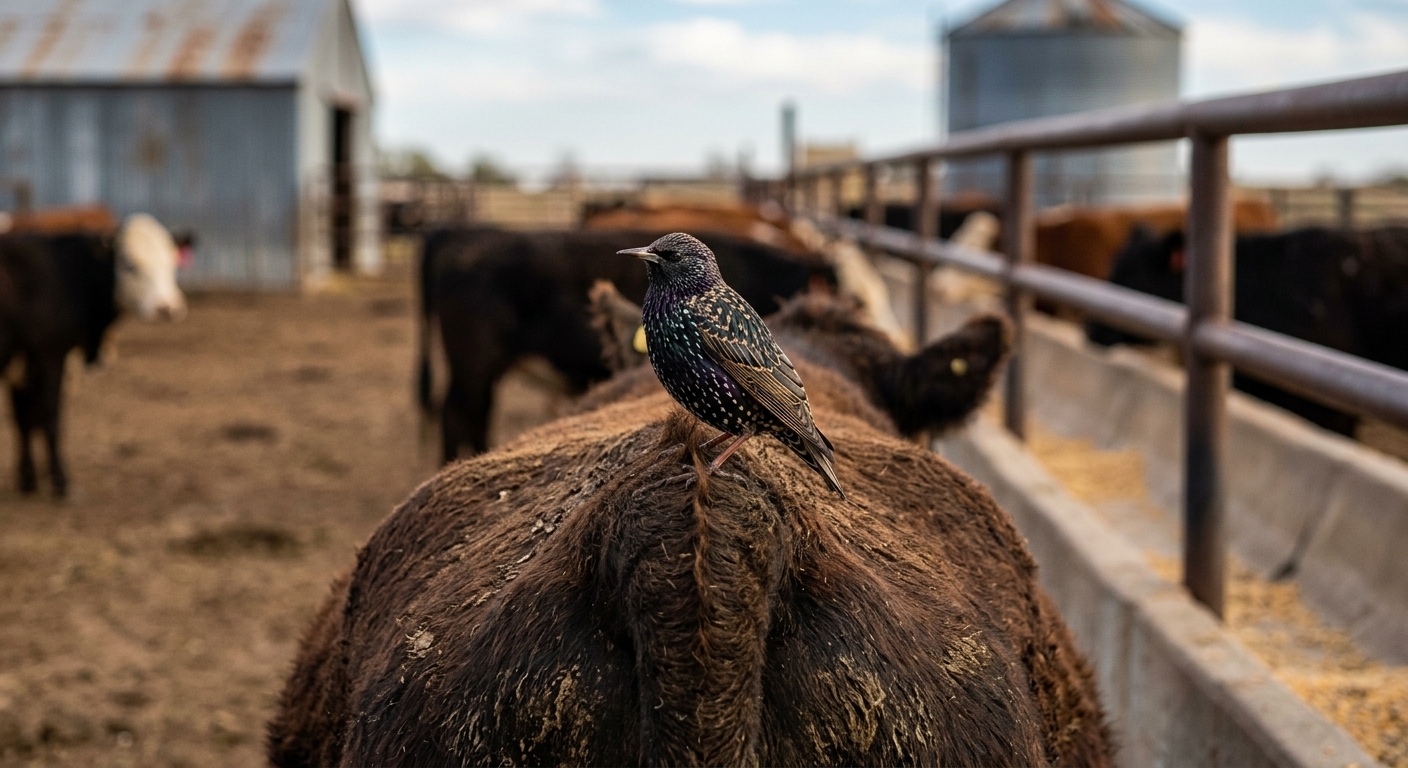
If there's food, starlings are likely to find it.
European starlings are one of the biggest pest-bird concerns for agricultural operations because they are highly adaptable and comfortable around people, livestock, buildings, and equipment.
During fall and winter, they can form enormous flocks and concentrate around dependable food sources.
Feedlots
Starlings are attracted to cattle feed, particularly areas around feed bunks and spilled grain. They can gather in large numbers around feeding areas, especially when cattle are being fed high-energy rations.
Dairies
Dairy operations can provide everything starlings need: feed, water, shelter, and livestock areas.
Look for them around feed lanes, commodity storage, barns, and areas where feed is spilled.
Grain facilities
Grain bins, elevators, processing areas, and loading zones can become major attraction points when grain is accessible.
Harvested fields
After harvest, leftover grain and crop residue can provide an easy food source.
Large starling flocks can consume and contaminate feed, create significant amounts of droppings, and turn buildings, equipment, and livestock areas into roosting sites.
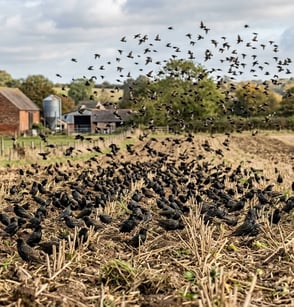
Grackles don't need much convincing when there's an easy meal nearby.
Common grackles are especially important for agricultural operations because they can travel and feed in large groups.
They are attracted to both natural and human-provided food sources, making farms and livestock operations particularly appealing.
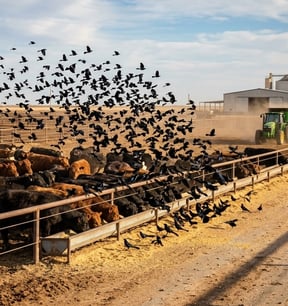
Feedlots
Feed bunks, spilled feed, and areas around cattle pens can attract grackles.
Corn and grain fields
Ripening crops can provide an abundant food source, while post-harvest fields can continue attracting birds because of leftover grain.
Dairy operations
Feed storage, commodity areas, and livestock feeding areas can become gathering points.
Grain handling facilities
Grackles may concentrate around grain spills, loading areas, storage facilities, and equipment where food is readily available.
The biggest issue isn't necessarily one bird.
It's the flock.
A handful of grackles can quickly turn into hundreds of birds when an operation provides a reliable food source.
When blackbirds start flocking, agricultural operators should pay attention.
The term "blackbird" can refer to several species, including red-winged blackbirds and other blackbird species that can form large feeding flocks.
They're particularly relevant during the fall because migration and seasonal movements can concentrate birds around agricultural areas.
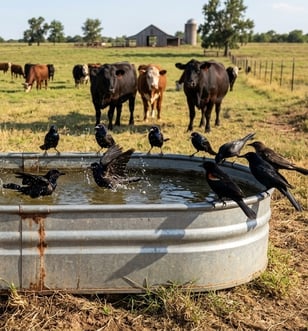
Corn fields
Ripening and recently harvested crops can attract large numbers of blackbirds.
Grain fields
Fields containing accessible grain can become feeding areas, particularly during migration.
Livestock operations
When feed is available, blackbirds may move from surrounding agricultural fields into feedlots and other livestock facilities.
Grain storage areas
Spilled grain around bins, augers, conveyors, trucks, and loading areas can provide an easy food source.
Blackbirds can create a problem that follows the food.
As crops are harvested, birds may shift from fields to grain storage, livestock feeding areas, and other nearby food sources.
That's why bird pressure shouldn't always be viewed as a single-location problem.
They're small, but don't underestimate them.
House sparrows don't form the massive migratory flocks associated with some blackbirds or starlings, but they can become persistent residents around agricultural buildings.
Unlike migratory species, house sparrows may establish themselves around a facility and remain there year-round.
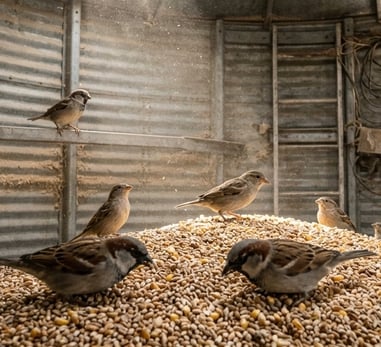
Barns and agricultural buildings
Openings under roofs, eaves, vents, and other sheltered areas can provide nesting locations.
Grain storage areas
Spilled grain and accessible commodities can attract sparrows.
Livestock facilities
Feed and water make livestock buildings attractive locations.
Equipment and storage buildings
Any building providing food, shelter, and nesting opportunities can become a long-term sparrow habitat.
The problem with sparrows is often persistence.
Once they establish nesting and feeding locations, simply chasing them away may not solve the underlying problem.
Starlings, grackles, blackbirds, and sparrows aren't the only birds agricultural operators should monitor.
Depending on location and operation type, other flocking species can take advantage of agricultural food sources.
The important thing isn't always identifying one specific bird.
It's recognizing the pattern:
Birds are finding food at your operation.
And when food, water, and shelter are consistently available, bird pressure can increase quickly.
Different operations have different vulnerabilities, but several locations deserve special attention as fall approaches.
Feed is one of the biggest attractants on livestock operations.
Watch for birds gathering around cattle feeding areas, particularly where feed is spilled or remains accessible.
Bins, elevators, commodity sheds, augers, conveyors, and loading areas can all provide opportunities for birds to access grain.
Don't assume bird pressure ends when the crop comes out of the field.
Leftover grain and crop residue can continue attracting birds.
Birds need water, too.
Stock tanks, troughs, and other accessible water sources can become gathering points.
Agricultural buildings provide shelter from weather and potential nesting and roosting locations.
Pay particular attention to roof edges, rafters, vents, ledges, and openings.
Spilled grain around trucks, trailers, augers, conveyors, and loading areas can create an unexpected food source.
One of the biggest mistakes agricultural operators can make is treating bird control as a problem that begins after birds have already established themselves.
By that point, the birds may already have:
And once birds learn that an operation provides a reliable source of food, getting them to move somewhere else can become much more difficult.
That's why September is a good time to start looking.
Walk your operation.
Look for bird activity.
Identify where birds are feeding, drinking, nesting, and roosting.
Then determine what is attracting them.
Fall bird pressure isn't just about birds flying over your property.
It's about where they're landing.
A feedlot can become a feeding station.
A grain facility can become a buffet.
A dairy can provide food, water, and shelter.
And a harvested field can become an easy source of leftover grain.
The key is recognizing the warning signs before a few birds become a flock.
This fall, don't just watch the weather. Watch the sky, and watch where the birds are landing.