
Poultry Farms
Bird Flu
Avian Influenza
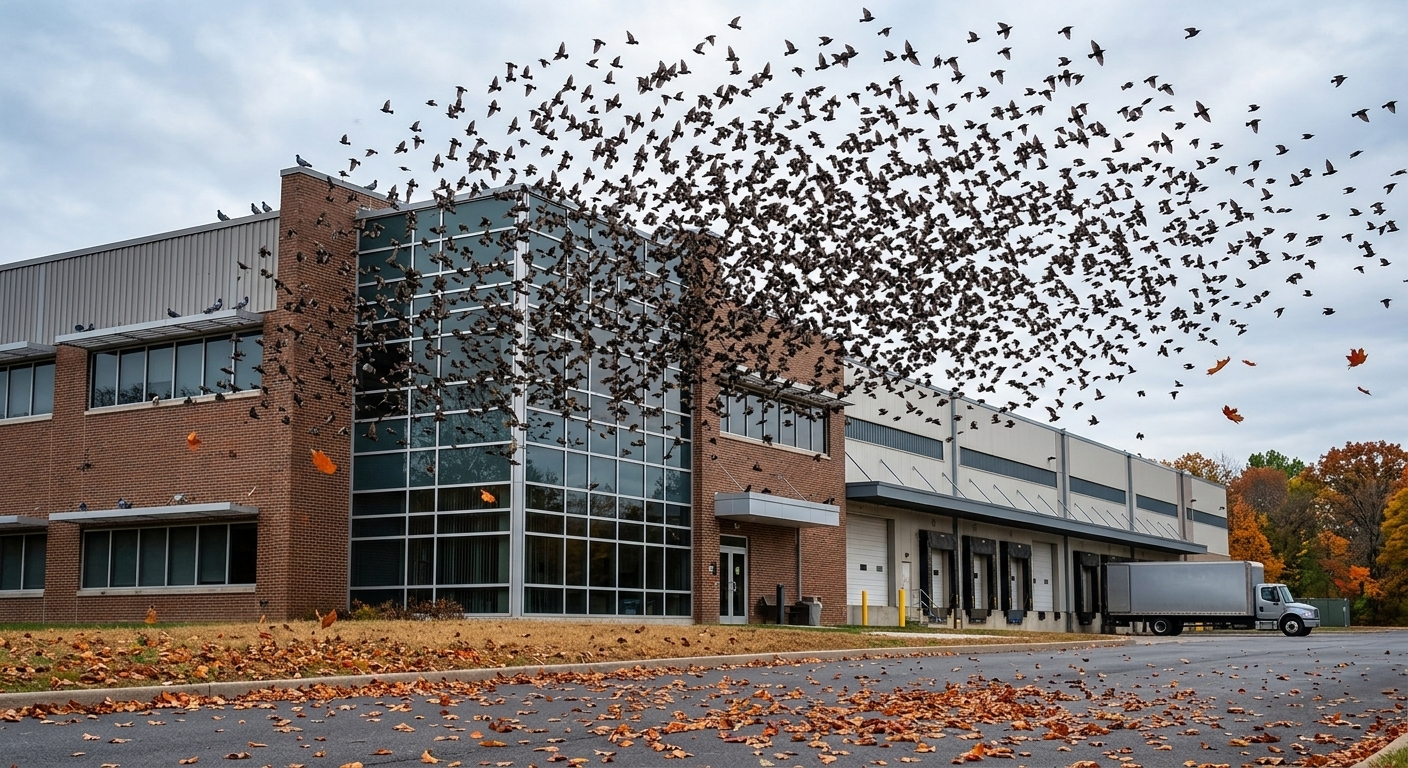

Fall is coming, and with it, millions of hungry, migrating birds looking for food, water and shelter.
If you're a facility manager, September is the time to start paying attention.
Because here's the thing:
Birds aren't randomly choosing your building.
They're looking for specific things.
Food.
Water.
Warmth.
Shelter.
And protected places to roost.
And your facility may be offering all five.
As fall migration gets underway, bird activity can increase dramatically around commercial buildings, warehouses, manufacturing facilities, agricultural operations and other large structures.
The good news?
If you know where to look, you can identify problems before a few birds turn into hundreds.
Here are the 5 places I'd be checking right now.
Start at the top.
Rooftops, parapets, ledges, beams and other elevated surfaces are prime real estate for birds.
Why? 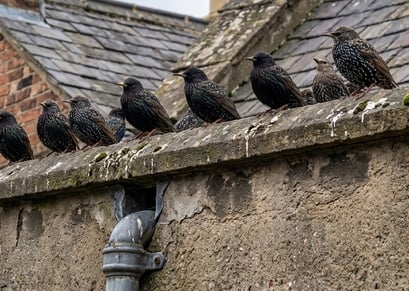
Because birds like being up high.
These areas give them a place to rest, observe their surroundings and stay away from many ground-level threats.
And once birds find a comfortable roosting location, they can return to it again and again.
The problem isn't just the birds sitting there.
It's what they're leaving behind.
Droppings can accumulate quickly, creating cleanup issues, unpleasant odors, slip hazards and potential damage to building surfaces and equipment.
And during fall migration, your roof could become a temporary rest stop for birds traveling through your area.
Don't wait until the roof is covered in droppings to start looking for a solution.
Here's one facility managers really need to pay attention to.
HVAC equipment can be incredibly attractive to birds.
Rooftop units provide elevated surfaces, shelter and, depending on the equipment and surrounding conditions, potential nesting opportunities.
And here's where things can get especially problematic:
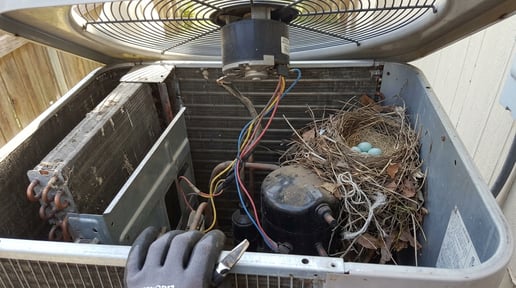
Birds don't care how expensive your HVAC system is.
If an area provides protection from weather and predators, they're going to investigate it.
Nesting material can also end up around equipment, vents and other components.
That's why a fall facility inspection shouldn't just mean checking the roof.
Look at the equipment sitting on the roof, too.
Check around HVAC units, pipes, conduits and other structures where birds could potentially land, roost or nest.
A few minutes of inspection now could help prevent a much bigger maintenance headache later.
If I were managing a warehouse or distribution facility, loading docks would be high on my bird-control checklist.
Think about what a loading dock provides.
Food. 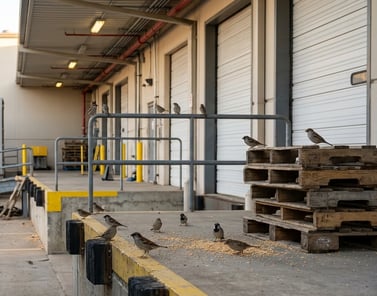
Shelter.
Water.
Warmth.
Constant activity.
And plenty of places for birds to perch.
There's also another major factor:
Loading docks are constantly opening and closing.
That can give birds easy access to interior areas of a building.
And once birds discover that your facility is a reliable source of food or shelter, they'll remember it.
This is especially important during fall migration when birds are burning enormous amounts of energy traveling and looking for reliable food sources.
Your loading dock may look like an ordinary part of your building to you.
To a hungry bird, it can look like a buffet with a roof over it.
This one seems obvious.
But it's also one of the most overlooked.
If your facility has food waste, you've probably got something birds want.
Restaurants, grocery stores, food processors, warehouses and manufacturing facilities can all create food opportunities for birds.
And dumpsters can become an easy feeding location.
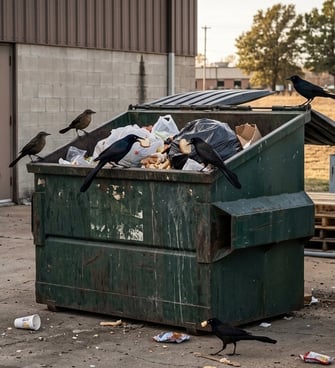
Birds don't have to work very hard to find food when yesterday's leftovers are sitting in an accessible dumpster.
That creates a cycle:
Food attracts birds → birds establish a routine → more birds discover the food → bird activity increases.
That's why bird control shouldn't just focus on the birds.
You also need to look at what is attracting them.
Keep dumpsters properly closed when possible.
Clean up spilled food.
Address overflowing waste.
And look at the areas surrounding your waste containers.
Because eliminating or reducing attractants can be one of the most important parts of a successful bird-management strategy.
Finally, look for the places birds can get inside.
Vents.
Louvers. 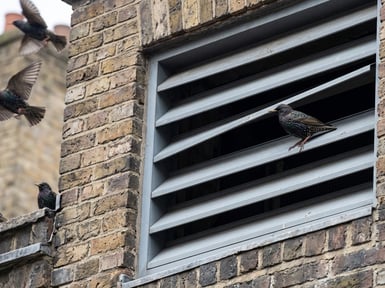
Roof openings.
Exhaust systems.
Gaps.
Unscreened openings.
And other areas where a bird can squeeze through.
These locations can become attractive nesting sites because they offer something birds are constantly searching for:
protection.
A protected cavity can shield birds and their nests from weather and predators.
But what is a safe nesting location for a bird can become a serious maintenance problem for a facility.
Nesting material can obstruct equipment or ventilation systems, and birds inside a building can create contamination, sanitation and cleanup concerns.
Walk around your building and look at it from a bird's perspective.
Where could a bird get in?
Where could it hide?
Where could it build a nest?
Those are the areas you want to identify before migration is in full swing.
Here's the biggest thing I want facility managers to understand:
Birds aren't choosing your facility by accident.
They're responding to the environment you've created.
If your building provides:
then you've created a pretty attractive property for birds.
And when fall migration begins, you're potentially going to have even more birds passing through looking for those same resources.
That's why September is a great time to inspect your facility.
Don't wait for the complaints.
Don't wait for the piles of droppings.
Don't wait until employees start finding nests around equipment.
And definitely don't wait until you've got hundreds of birds showing up every morning.
Find the problem areas before the birds do.
Before fall migration really gets moving, walk your facility and inspect these five areas:
☐ Rooftops & ledges
☐ HVAC equipment
☐ Loading docks
☐ Dumpsters & food waste areas
☐ Building openings & vents
Then ask one simple question at every location:
If you can answer that question, you're already one step closer to controlling the problem.
Because effective bird control isn't about chasing birds away after they've already taken over.
It's about understanding why they're there in the first place, and addressing the conditions that are attracting them.
Fall migration is coming.
Is your facility ready?
