Your Next Bird-Control Customer Might Already Be on Your Route
When you think about agricultural bird control, what comes to mind?
A large dairy with thousands of cattle. A massive feedlot. A poultry operation with strict biosecurity requirements.
These can be excellent opportunities, but they aren't the only places where birds create problems.
Some of your best prospects may be businesses you already visit or drive past every week.
A local sale barn. A custom feeder. A small feed mill. A horse operation with exposed feed. A commodity shed on a farm you've known for years.
These operations may not have thousands of head of cattle, but they still concentrate food, provide shelter, and create conditions that can attract pest birds.
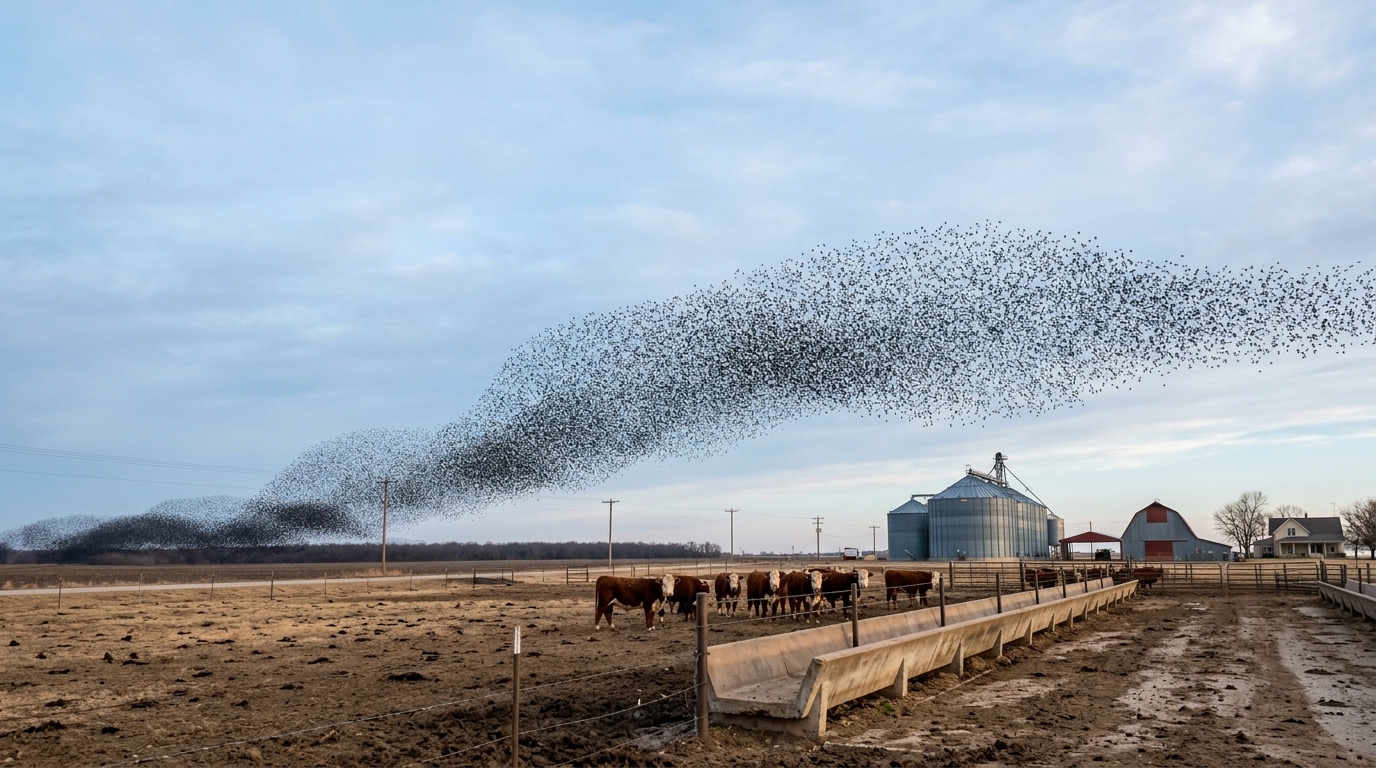
As winter approaches, dependable food sources can become especially important to birds searching for places to feed. Starlings, blackbirds, and other species may gather around livestock feeding areas, grain storage, spilled feed, and other accessible food sources.
The challenge is that many agricultural operators think about feed costs, animal health, and winter preparation without considering how much bird activity could be affecting their operations.
That creates an opportunity for pest management professionals.
You don't always need a new prospect. Sometimes you just need to ask a better question of a customer you already know.
1. Sale Barns and Livestock Auction Facilities
Sale barns bring animals, people, equipment, and feed together in one location. Depending on the operation, feed may be stored, handled, or distributed throughout the property.
These facilities can also provide birds with convenient places to perch and gather.
During busy periods, feed spills, accessible storage areas, and livestock feeding locations may attract starlings and other birds. Buildings, rafters, signs, and nearby trees can provide additional perching or roosting opportunities.
What to look for
- Birds gathering around livestock pens and feeding areas
- Droppings accumulating on rafters, walkways, or equipment
- Spilled feed around storage and handling areas
- Birds repeatedly landing on buildings or nearby structures
- Flocks arriving around predictable feeding times
The question to ask
"When the sale barn gets busy this winter, are you expecting much bird activity around the pens and feed areas?"
The answer may reveal a problem the customer has noticed but never addressed.
If bird activity is already an issue, ask which areas are most affected and whether the problem changes on sale days. That information can help you determine whether a more detailed site assessment is worthwhile.
2. Backgrounding Lots
Backgrounding operations receive young cattle and raise them before they move to the next stage of production. Feed delivery and livestock feeding are central to their daily routines.
Where feed is accessible, birds may find opportunities to feed alongside the cattle.
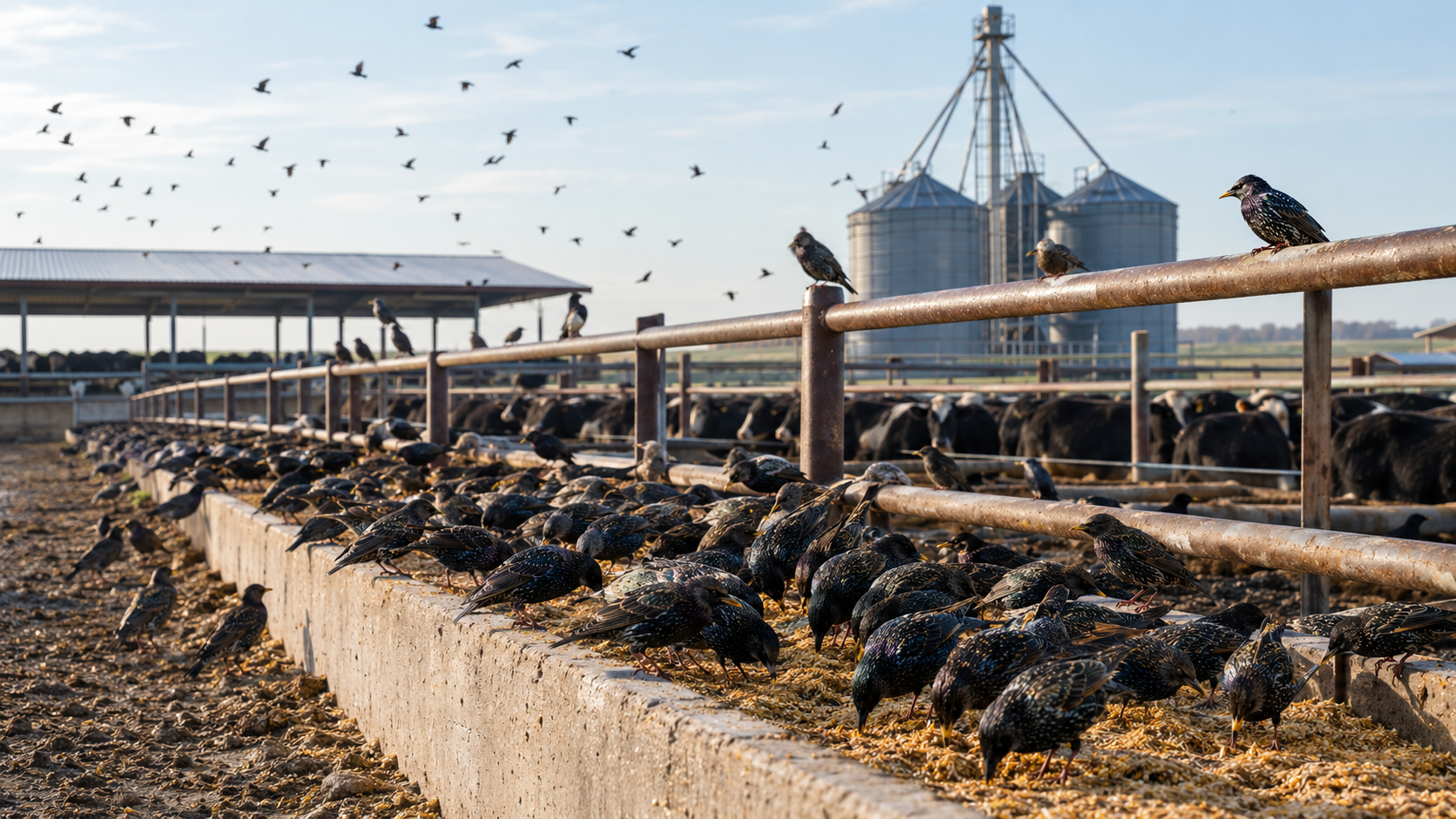
A flock may concentrate around particular bunks or feeding areas, especially when the same locations provide a dependable food source day after day.
What to look for
- Starlings feeding along bunk lines
- Birds gathering around feed delivery equipment
- Spilled feed beneath bunks and near commodity storage
- Large flocks arriving in the morning
- Repeated bird activity around the same pens
The question to ask
"Have you noticed more birds around your bunks as we head into winter?"
If the customer reports increasing activity, explore when the birds arrive, where they concentrate, and how long the problem has been occurring.
You can then help the customer evaluate whether bird activity warrants a closer look at feed access, sanitation, and appropriate control options.
3. Custom Feeders
Custom feeding operations may handle feed for multiple customers or manage livestock under a variety of feeding arrangements.
Depending on the operation, that can mean substantial quantities of feed moving through commodity bays, mixing areas, storage structures, and feeding locations.
These areas can attract birds when food is accessible.
The opportunity isn't limited to the number of cattle on the property. Feed handling itself may create attractive conditions.
What to look for
- Grain or feed accumulating around mixing equipment
- Birds landing near commodity bays
- Feed residue around loading and unloading areas
- Open structures that allow birds to access stored materials
- Repeated activity around equipment used throughout the day
The question to ask
"With all the feed you're handling this winter, are birds becoming a problem around your storage or mixing areas?"
This question connects bird activity to the customer's actual operation.
If the customer handles feed for several livestock producers, a successful assessment may also reveal additional locations where bird pressure needs to be evaluated.
4. Horse Operations and Equestrian Facilities
Horse farms, boarding facilities, training barns, and riding operations can be overlooked when PMPs think about agricultural bird control.
Yet these properties may store grain, pelleted feed, hay, and other materials that attract wildlife when accessible.
Feed rooms, open buckets, outdoor feeding stations, and spilled grain can create opportunities for birds to find food.
Birds can also leave droppings on stalls, equipment, walkways, and other surfaces that require regular cleaning.
What to look for
- Birds entering barns or feed storage areas
- Grain scattered around feeding stations
- Droppings on stall doors, rafters, or equipment
- Birds gathering around outdoor feeders
- Openings that allow birds to enter buildings
The question to ask
"Have you had any trouble keeping birds out of the barn or away from the horses' feed?"
For these customers, the conversation may focus as much on sanitation and protecting stored feed as it does on the number of birds present.
Any recommended approach should account for horses, other animals, employees, and the specific conditions of the facility.
5. Commodity Sheds and Feed Storage Buildings
Commodity sheds can be attractive feeding and gathering locations when birds have access to stored feed.
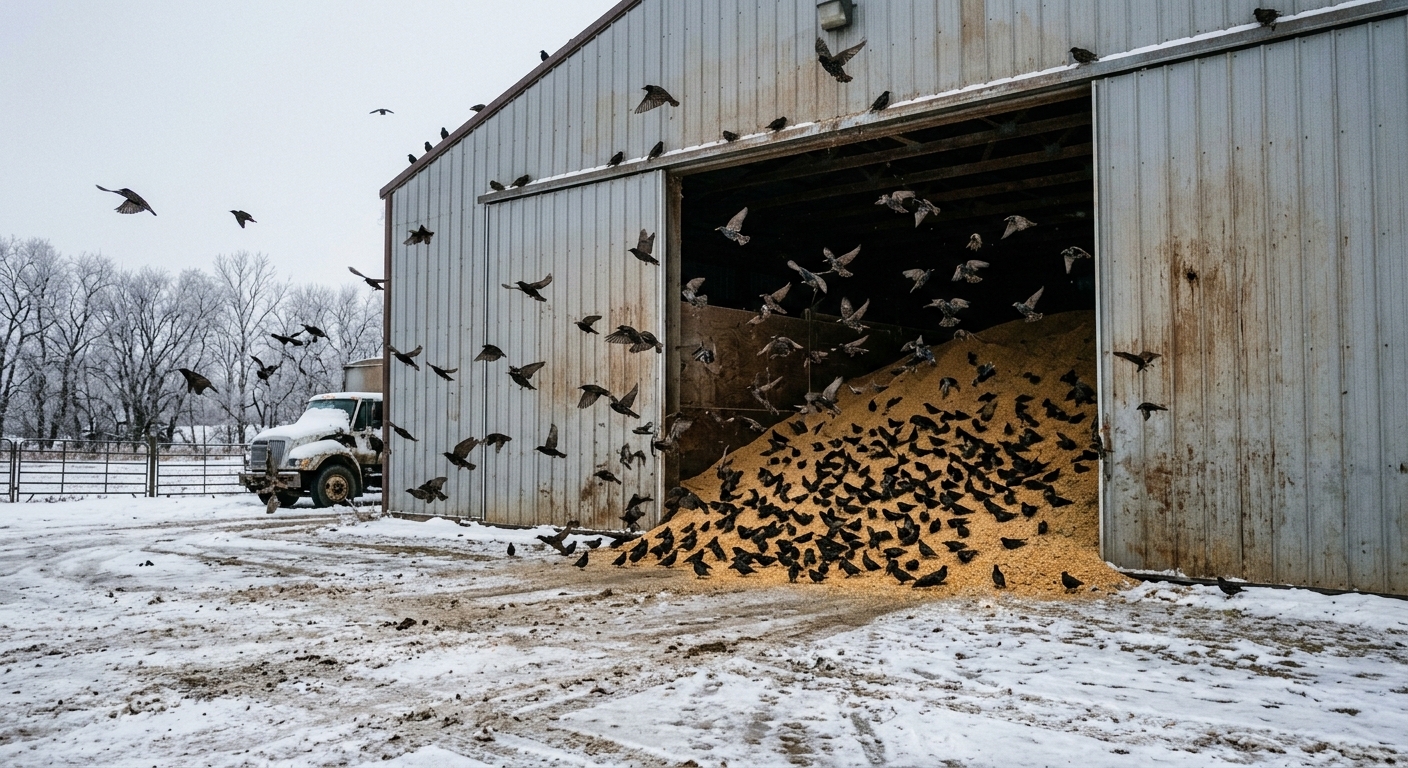
Depending on the materials stored and how the building is designed, birds may enter through open doors, gaps, or other openings. They may also perch on structural beams or gather around the building's exterior.
Once birds establish a regular feeding pattern, the problem can become an ongoing management issue.
What to look for
- Birds entering open-sided storage structures
- Flocks gathering on rooflines and structural beams
- Droppings near stored commodities
- Spilled feed around loading areas
- Openings that allow birds to enter and exit freely
The question to ask
"Are birds getting into your commodity storage areas, or are you mostly seeing them outside?"
That distinction matters.
Birds gathering outside may require a different assessment from birds entering a building and accessing stored materials. Understanding where the activity occurs helps identify appropriate next steps.
6. Small Feed Mills
A small feed mill might not have the footprint of a large commercial facility, but it can still handle substantial amounts of grain and feed.
Loading areas, conveyors, storage bins, receiving points, and spilled material may attract birds when food is accessible.
Birds inside production or storage areas can also create sanitation concerns that deserve attention.
What to look for
- Birds gathering near grain receiving areas
- Feed or grain spills around equipment
- Birds entering loading bays
- Droppings on ledges and building structures
- Repeated bird activity around storage bins
The question to ask
"Have birds been gathering around your grain receiving or loading areas during the colder months?"
If the answer is yes, ask whether the birds are staying outside or entering the facility.
Food and feed handling environments require careful consideration of sanitation, exclusion, and applicable operational requirements. Any management plan should be tailored to the facility rather than applied as a one-size-fits-all solution.
7. On-Farm Grain and Feed Storage
Don't overlook farms that store their own grain or feed.
An operation may have bins, sheds, grain handling equipment, and other structures that provide birds with access to food or places to gather.
Even when the main livestock facility isn't experiencing heavy bird activity, a nearby storage area could be attracting flocks.
What to look for
- Birds gathering around grain bins
- Spilled grain near augers or unloading points
- Open doors or gaps in storage buildings
- Flocks moving between storage areas and livestock pens
- Bird activity around harvested grain or accessible feed
The question to ask
"How much bird activity are you seeing around your grain bins and feed storage this winter?"
This is a useful question for producers who may not consider bird control a separate service need.
It also provides a natural opening to discuss practical steps such as improving storage integrity, cleaning up spills, limiting access to food, and evaluating additional bird-management options where appropriate.
Why Winter Is a Good Time to Ask
Winter changes the conditions surrounding many agricultural operations.
Feed remains essential to livestock production, and exposed or easily accessible food can continue attracting birds. Depending on the region, season, weather, and species, large flocks may move between communal roosts and dependable feeding areas.
That makes winter planning a useful opportunity to discuss bird activity before it becomes a larger concern.
The important point is not that every agricultural property will experience a serious bird problem. It won't.
Instead, look for operations where three conditions overlap:
- Accessible food: Birds can reach feed, grain, or other attractive materials.
- Recurring activity: Birds repeatedly gather at the same locations.
- A meaningful impact: The activity creates a sanitation, feed-loss, operational, or other concern for the customer.
When these conditions are present, a more detailed assessment may be justified.
You don't have to convince every agricultural customer that birds are a problem. You need to identify the customers who have a problem worth solving.
Stop Making Special Calls. Start Asking Better Questions.
One of the biggest barriers to developing agricultural bird-control business is treating it as a separate sales activity.
You may already have a route that takes you past dozens of farms, livestock operations, feed suppliers, and agricultural businesses. You might know the owners, understand their operations, and already have a reason to talk with them.
Instead of making a separate bird-control call, work the topic into conversations that are already happening.
When you're discussing winter feed, ask about birds.
When you're checking on a commodity shed, ask whether birds are entering the building.
When you're visiting a backgrounding lot, ask whether the customer has noticed more starlings around the bunks.
You don't need a lengthy pitch. You need a question that encourages the customer to describe what's happening.
For example:
"While we're setting your winter feed, what's your bird situation going to look like in January?"
That question works because it connects bird control to something the customer is already planning for.
If they say birds aren't a problem, you've learned something useful. If they describe recurring flocks, feed contamination, or other concerns, you've found a reason to investigate further.
Either way, you're building a better understanding of the account.
How to Turn Five Accounts Into Five Opportunities
Start with the accounts you already know.
Step 1: Review your route.
Identify five agricultural operations you regularly drive past or already visit.
Step 2: Look for accessible feed.
Consider whether each property has feeding areas, commodity storage, grain handling equipment, or other conditions that may attract birds.
Step 3: Ask the question.
During your next conversation, ask the customer what their bird situation typically looks like in January.
Step 4: Record the response.
Note whether the customer sees birds, where the activity occurs, and whether it creates a concern worth investigating.
Step 5: Send the list to Lloyd or Solomon.
Include the five account names and any useful details from the conversations. Flag the accounts where the customer has identified a potential bird-control issue.
The objective is not to turn every stop into a sale. It's to find opportunities that may otherwise go unnoticed.
The Bottom Line: Your Next Customer May Already Know You
You don't always need a new territory, a new lead source, or a completely separate sales campaign to grow your agricultural bird-control business.
Sometimes the opportunity is already on your route.
Sale barns, backgrounding lots, custom feeders, horse operations, commodity sheds, small feed mills, and on-farm storage can all be worth evaluating when birds have access to food and create a meaningful operational concern.
The key is to stop assuming that bird control belongs only to the largest agricultural facilities.
Ask the question. Listen to the answer. Identify the accounts that deserve a closer look.
Your assignment this week: Pick five accounts you drive past and ask, "What's your bird situation going to look like in January?"