
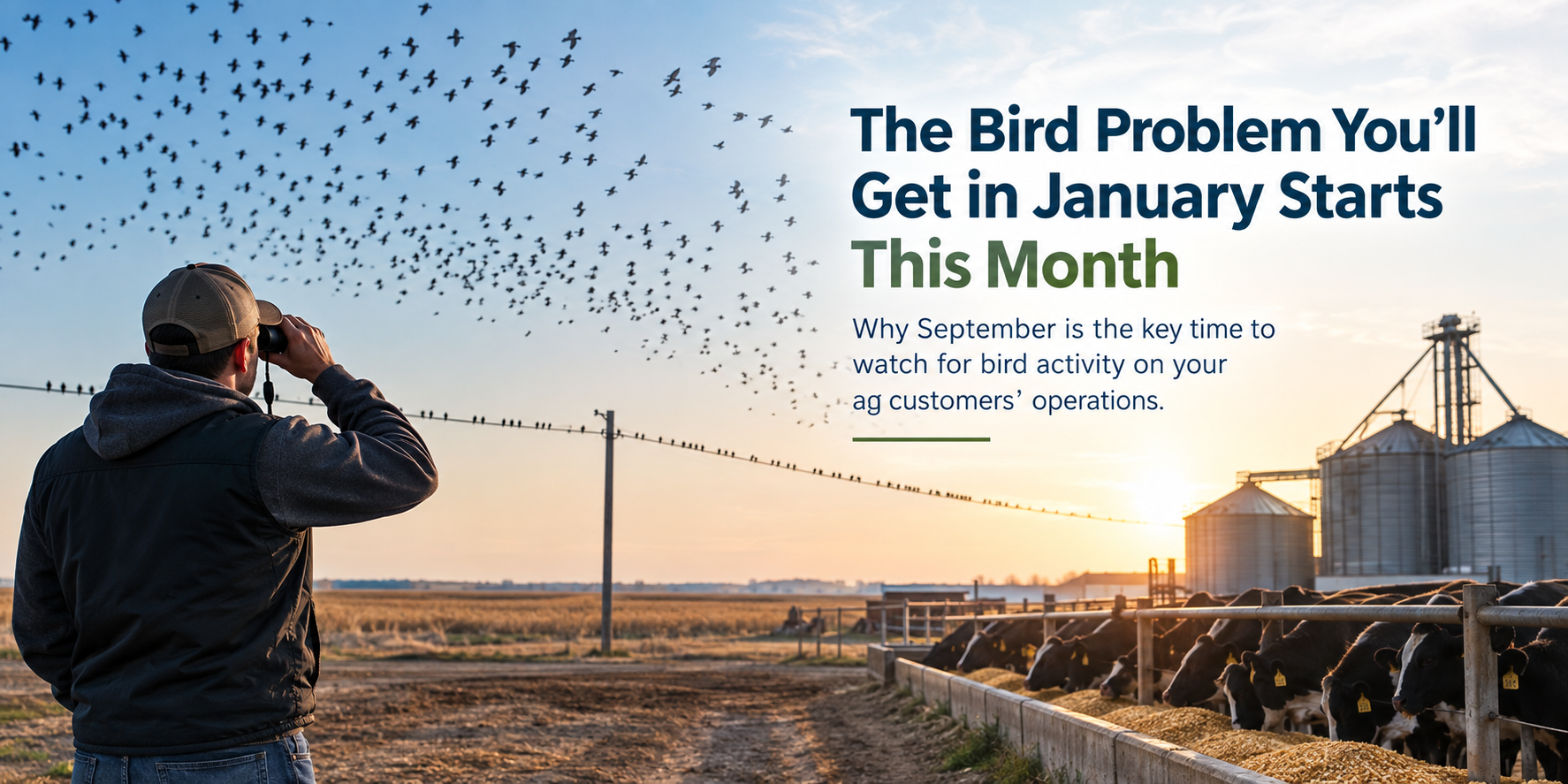
Poultry Farms
Bird Flu
Avian Influenza
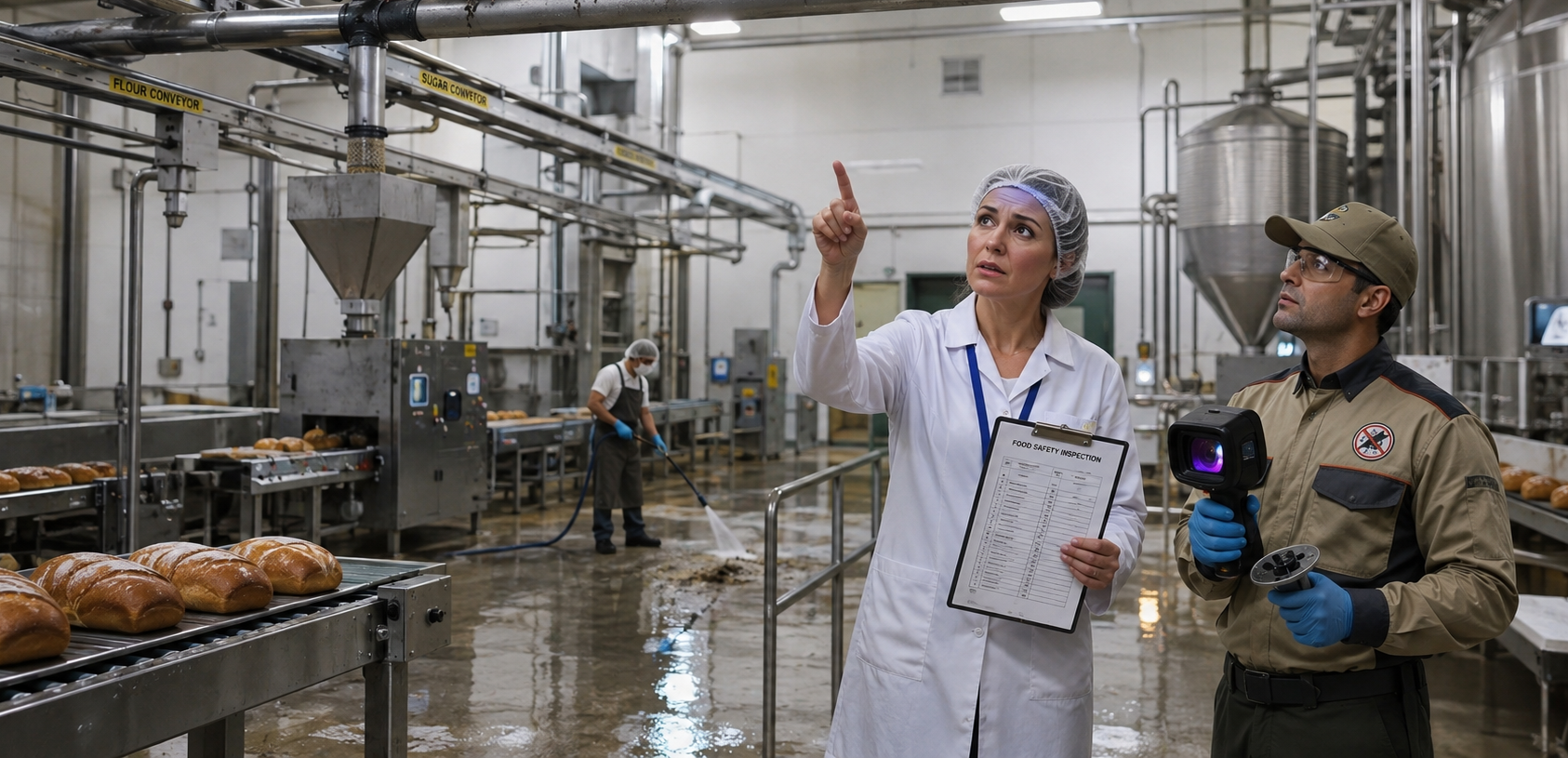

For years, birds around commercial facilities were often treated as a nuisance.
A few birds on the roof. Droppings around the loading dock. Nesting beneath a sign. Grackles gathering in the parking lot.
But the conversation is changing.
Food safety professionals are paying closer attention to bird activity, and that concern is becoming increasingly visible within the food-processing industry itself.
In fact, Food Safety Magazine is hosting a webinar on August 25, 2026, specifically dedicated to bird control in food processing facilities. The webinar, titled “Don't Wing It: Bird Control for Food Processing Facilities,” will address the safety, compliance, and operational risks birds can create and why proactive bird management should be a priority for businesses.
That should get the attention of every facility manager responsible for protecting a food, agricultural, manufacturing, distribution, or processing operation.
Bird control is no longer simply about keeping buildings clean. It is becoming part of the larger conversation around facility protection, sanitation, compliance, and risk management.
Food Safety Magazine covers issues that matter to food manufacturers, processors, safety professionals, and facility managers.
So when bird control becomes the subject of a dedicated educational webinar, it is worth paying attention.
The August 25 webinar specifically identifies several problems associated with birds around food-processing facilities, including:
The publication also emphasizes that successful bird control is more complicated than it may appear and that facilities should take proactive steps to minimize and prevent bird activity.
That last point is particularly important.
The time to think about bird control is before the birds establish themselves.
Read the Food Safety Magazine webinar: “Don’t Wing It: Bird Control for Food Processing Facilities”
Fall migration is approaching, and facilities across the United States are about to become increasingly attractive stopping points for migrating birds.
Commercial buildings provide exactly what many birds are looking for:

A facility doesn't have to be intentionally attracting birds to become an attractive habitat.
From a bird's perspective, a food-processing plant, distribution center, agricultural facility, warehouse, restaurant, or manufacturing building can look like an ideal place to stop.
And once birds discover a reliable food, water, or shelter source, they can return repeatedly.
The biggest mistake facility managers can make is looking at bird activity as an isolated nuisance.
Birds don't just leave droppings.
They can create problems throughout a facility's operation.
Droppings can accumulate on roofs, equipment, walkways, loading areas, vehicles, and other surfaces. Nesting materials can accumulate around vents, equipment, roof penetrations, signage, and other structures.
Birds can also move between exterior areas and building interiors when access points aren't properly addressed.
For food-related facilities, that creates a much bigger concern.
The question isn't simply:
“How do we get the birds off the roof?”
The better question is:
“How do we prevent bird activity from becoming a sanitation, operational, or compliance problem?”
That requires a proactive approach.
One of the biggest challenges with bird control is that facility managers often wait until the problem becomes obvious.
By that point, birds may already have established preferred roosting areas.
They may have developed feeding patterns.
They may be nesting.
Droppings may be accumulating.
Employees may be cleaning the same areas repeatedly.
And the facility may already have a documented pest or sanitation issue.
At that stage, simply putting up a deterrent in one location may not solve the underlying problem.
Professional bird management requires understanding why the birds are there in the first place.
This is another reason professional bird control deserves more attention.
There isn't one universal solution that works for every bird, every building, or every situation.
Different species behave differently.
A bird that is roosting on a roof isn't necessarily responding to the same conditions as a bird nesting inside a sign or feeding around a loading dock.
Some birds can maneuver through deterrent systems.
Others can nest around them.
And large flocks can simply move to another part of the property when one area is treated.
Effective bird management starts with identifying:
What species are present?
Why are they using the facility?
Where are they entering, feeding, nesting, or roosting?
What conditions are attracting them?
What combination of control methods is appropriate for the situation?
That is where professional expertise becomes critical.
The upcoming migration season gives facility managers an opportunity to get ahead of the problem.
Instead of waiting for the first major flock to appear, facilities should be evaluating their properties now.
Look at:
Are birds gathering on elevated roof sections, parapets, HVAC equipment, or other structures?
Are food, waste, spilled grain, or other materials providing an easy food source?
Are birds nesting behind signs, inside cavities, or beneath architectural features?
Are there openings or protected areas that could provide nesting opportunities?
Are large flocks gathering around vehicles, light poles, landscaping, or food sources?
Is accessible food waste attracting birds to the property?
Are stored commodities, spilled grain, feed, or harvesting activities creating a predictable food source?
These areas can become hotspots during migration.
Identifying them before bird pressure increases gives facilities more time to implement a strategy.
Bird control is a specialized part of pest management.
It requires understanding bird behavior, species, facility conditions, regulations, and the appropriate control strategy for each situation.
Avitrol is built specifically around professional bird management.
Rather than treating bird activity as an afterthought, Avitrol provides professional pest management professionals with products, training, and resources designed to help them address challenging bird situations.
Avitrol products give trained professionals another tool to incorporate into a comprehensive bird management program when appropriate and legally permitted.
From agricultural operations dealing with large bird populations to commercial facilities dealing with persistent flocking and roosting activity, having the right product and the right strategy can make a significant difference.
But the product is only part of the equation.
The right bird. The right blend. The right application.
Professional bird control starts with understanding the situation before choosing the solution.
Fall migration doesn't give facility managers much time to react once birds have already established a reliable food or roosting location.
A flock that discovers an attractive facility today can return tomorrow.
And the next day.
And the next migration season.
That's why proactive bird management matters.
The goal isn't simply to clean up after birds.
The goal is to prevent bird activity from becoming a recurring facility problem in the first place.
The fact that Food Safety Magazine is dedicating an entire webinar to bird control in food processing facilities is a sign that the industry is taking the issue more seriously.
Birds are being discussed in terms of food safety, compliance, operations, structural protection, and risk management, not simply aesthetics.
And that conversation is happening just as another fall migration season approaches.
For facility managers, the message is simple:
Don't wait until birds become a problem to start thinking about bird control.
Evaluate your facility now.
Identify where birds are feeding, nesting, and roosting.
Address the conditions attracting them.
Work with a professional who understands bird behavior and facility protection.
And make sure your bird management strategy is ready before migration pressure increases.
This fall, don't just react to the birds. Be ready for them.
Avitrol helps pest management professionals tackle challenging bird-control situations with professional products, training, and resources.
If birds are becoming a problem at your facility, now is the time to develop a plan, before the flock arrives.
