
Poultry Farms
Bird Flu
Avian Influenza

If you work in bird control long enough, you know one thing is certain - our work only gets noticed when something goes wrong.
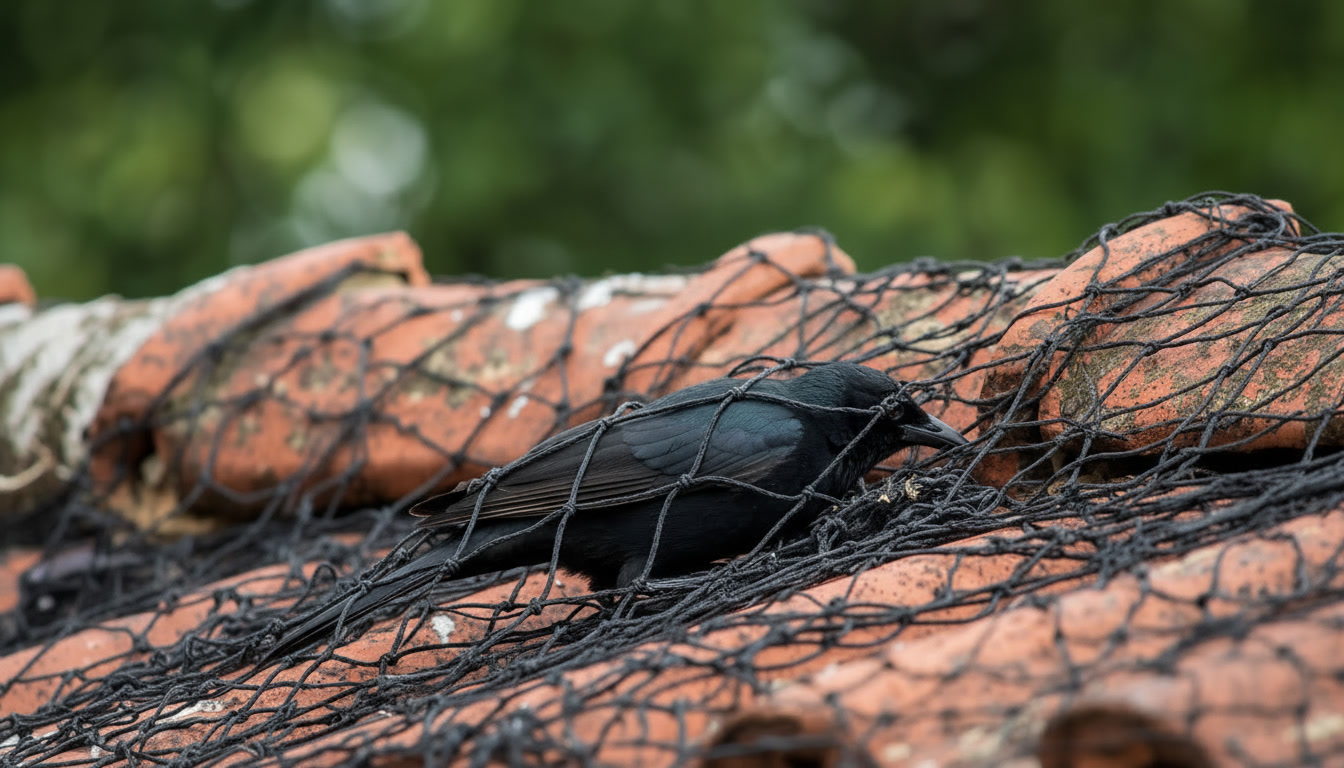
Recently, a blackbird became trapped in bird netting installed at a hospital courtyard in the UK. Staff reportedly tried to keep the bird alive by feeding it while access and legal concerns delayed rescue efforts. The situation quickly drew public attention, criticism, and wildlife welfare concerns.
For those of us in the industry, this isn’t just another headline.
It’s a reminder.
A reminder that the methods we choose - and how we install them - matter just as much as the results we promise.
Bird netting and bird spikes have long been considered “go-to” physical exclusion tools. They’re familiar. They’re widely available. They’re often specified in bids without much discussion.
But here’s the truth many professionals already understand:
👉 These tools are not universal solutions.
👉 And in public-facing environments, they can quickly become liabilities.
Public areas like hospitals, schools, government buildings, and transport hubs present unique challenges:
When netting is installed in hard-to-reach courtyards, atriums, or architectural voids, it can become impossible to properly monitor.
And when monitoring stops, risk starts.
Netting is designed to exclude - not capture.
But improper installation, poor tensioning, structural damage, or simple wear over time can create:
In high-visibility locations, this can lead to public outrage faster than any bird complaint ever could.
The optics matter.
A single trapped bird can undo years of professional credibility - not just for the contractor involved, but for the entire industry.
Spikes are often viewed as a cleaner alternative.
But spikes also have limitations:
In public environments, spikes can also signal “hostility toward wildlife” to observers who don’t understand their purpose.
Perception becomes part of the job.
Bird control in public areas isn’t just about stopping roosting or nesting.
It’s about balancing effectiveness, safety, visibility, and long-term sustainability.
Professionals should be asking:
Sometimes, exclusion is necessary.
But sometimes, behavioral modification, habitat management, or targeted flock deterrence technologies offer a smarter path.
Clients today are more informed.
The public is more vocal.
And wildlife welfare expectations are higher than ever.
Bird control professionals who continue to rely on “default installs” risk falling behind - or worse, becoming the next viral headline.
The real mark of expertise isn’t how fast you can install netting or spikes.
It’s knowing when not to.
Every site is different.
Every structure tells a different story.
The best bird control professionals don’t just install products -
they design outcomes.
And in public spaces, the right outcome isn’t just bird-free.
It’s safe, humane, maintainable, and defensible.
