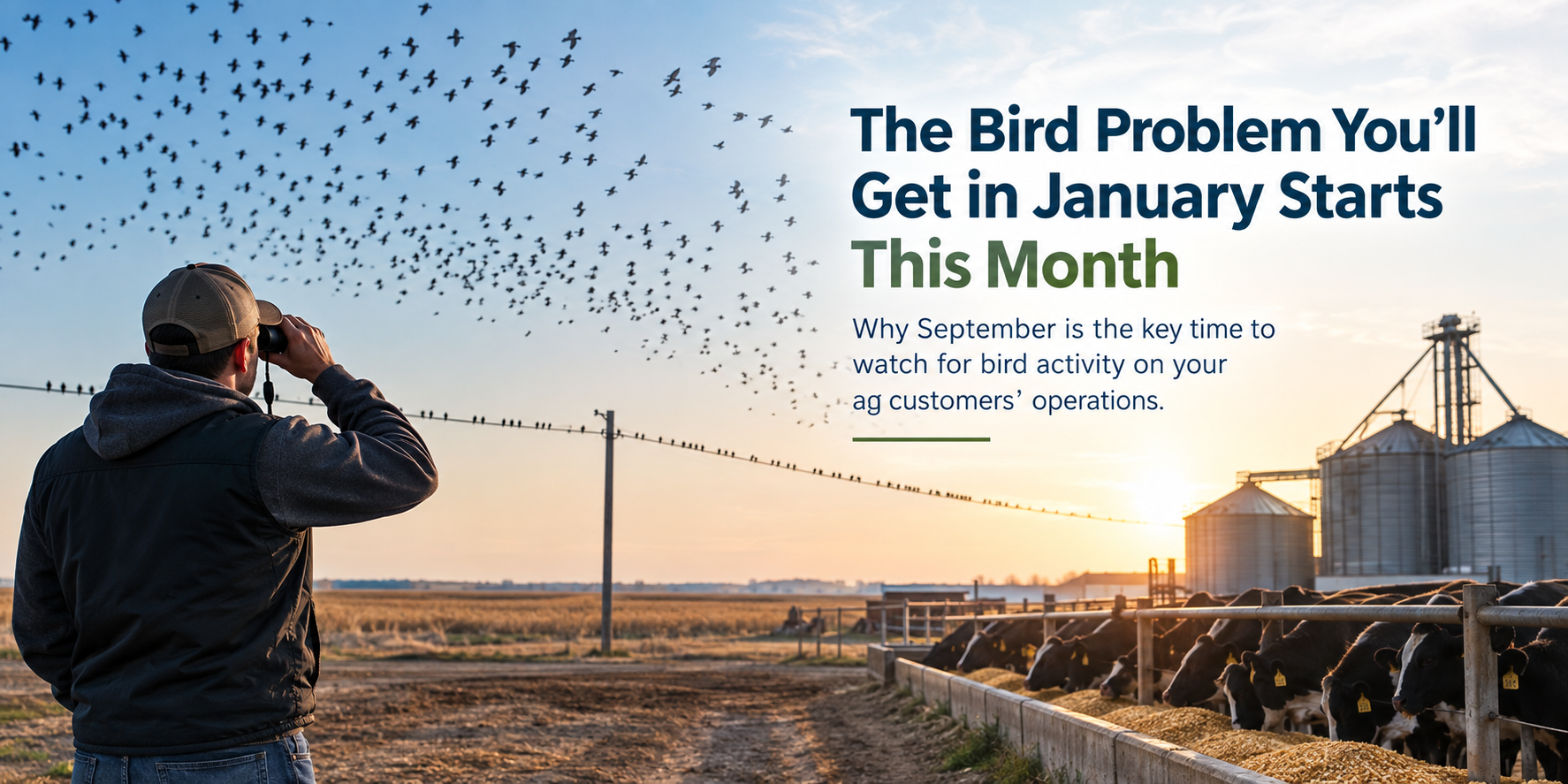
Birds are already moving. And for facilities that haven't addressed their bird problems yet, waiting until fall migration is in full swing could be a costly mistake.
Highly pathogenic avian influenza (HPAI), commonly known as bird flu, is still circulating among wild birds in the United States.
According to USDA APHIS, wild birds can carry HPAI without showing obvious signs of illness. Even more importantly, migrating birds can carry the virus into new areas and potentially expose domestic poultry. USDA also reports that HPAI detections tend to increase during fall and spring migration periods.
That makes the weeks ahead an important time for facilities to take a hard look at their bird-control programs.
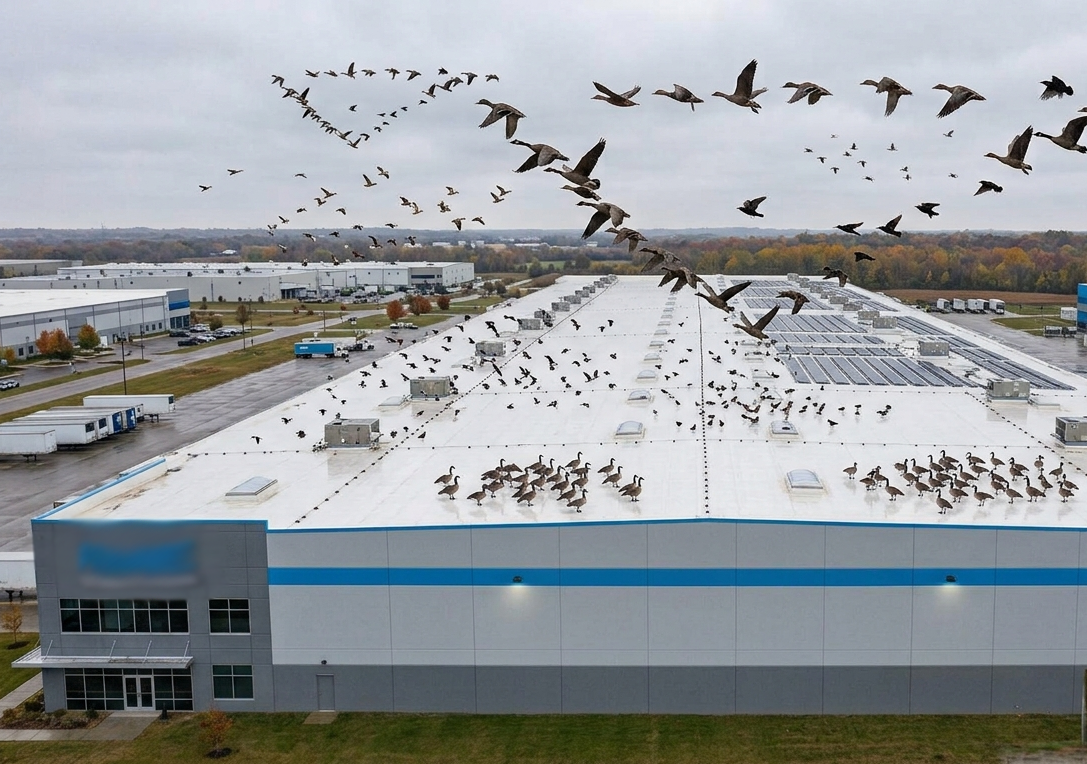
Because when thousands of birds begin moving across the country, a building that already provides food, water, shelter and protected nesting areas can quickly become a bird congregation site.
And that's more than a nuisance problem.
Bird Control Is Becoming Part of the Biosecurity Conversation
For years, many facilities treated birds primarily as a sanitation or property-damage issue.
Bird droppings on sidewalks.
Birds nesting above entrances.
Flocks gathering around loading docks.
Birds getting into warehouses.
Contamination around food and waste areas.
But today, facilities operating around livestock, food, agriculture and other sensitive environments have another reason to take bird activity seriously:
Biosecurity.
USDA identifies wild birds as an important source of HPAI exposure for domestic poultry. Wild birds can carry the virus and move it geographically during migration.
That doesn't mean every bird on a property is infected.
It doesn't mean every bird dropping represents H5N1 contamination.
And it doesn't mean bird control alone can eliminate disease risk.
But it does mean that unnecessary wildlife congregation around sensitive facilities creates an exposure opportunity that should be taken seriously.
The Problem Often Starts Outside the Building
Consider what happens when a flock discovers a facility.
First, they find food.
Then they find water.
Then they discover a roofline, ledge, loading dock, sign, awning or other protected location where they can rest.
Eventually, the facility becomes part of their daily routine.
During migration, additional birds can join them.
Now you've gone from seeing a few birds occasionally to having a recurring bird population around your building.
And that creates more opportunities for droppings, nesting material, feathers and other biological material to accumulate around areas where employees, customers, equipment, products or livestock may be present.
For agricultural operations, this can be particularly concerning.
For commercial facilities, it can become a sanitation and employee-safety issue.
For food-related operations, contamination concerns can become even more significant.
Don't Wait Until You Have Hundreds of Birds
One of the biggest mistakes facilities make is waiting for the problem to become obvious.
They see five birds and think:
"That's not enough to worry about."
Then it's 25.
Then 100.
Then the birds have established roosting and feeding patterns.
At that point, eliminating the attraction can become significantly more difficult.
The best time to address a bird problem is before the population explodes.
Fall migration provides a predictable opportunity to get ahead of the problem.
Before migration intensifies, facilities should identify the locations that consistently attract birds and determine why they're there.
Look at the Building From a Bird's Perspective
Walk the property and ask simple questions:
Where can birds land?
Look at roof edges, signs, beams, pipes, rafters, light fixtures, ledges and other elevated surfaces.
Where can they nest?
Inspect covered areas, equipment, roof penetrations, HVAC areas, awnings and structural voids.
Where can they find food?
Look around dumpsters, loading docks, outdoor food storage, livestock feed, grain handling areas and employee break areas.
Where can they find water?
Standing water, drainage areas, leaks, ponds, troughs and other water sources can become attractants.
Where can they get inside?
Inspect doors, vents, roof openings, damaged screens and other access points.
Bird control isn't simply about putting up a deterrent.
It's about understanding why the birds chose the property in the first place.
Employee Safety Matters
CDC states that people with occupational exposure to infected birds or animals can be at increased risk of H5N1 infection. CDC specifically identifies workers around poultry and other potentially infected animals as people who need appropriate precautions.
That makes prevention and exposure reduction important components of an overall workplace safety strategy.
Again, this doesn't mean a facility should assume that every wild bird carries H5N1.
It means facilities should avoid creating unnecessary opportunities for employees to come into contact with large concentrations of wild birds and their droppings, particularly in sensitive environments.
Keeping birds away from employee entrances, loading docks, production areas, livestock areas and other high-traffic locations can help reduce those unnecessary interactions.
Documentation Could Matter, Too
There's another reason facilities should take bird problems seriously:
Risk management.
If a facility knows it has a persistent bird problem and does nothing about it, that can create questions later if an employee, customer, contractor or other person claims they were exposed to a hazardous condition.
This is not a guarantee that a bird-control program will prevent a lawsuit, nor does bird presence by itself establish liability.
But from a risk-management standpoint, having a documented process for identifying hazards, correcting conditions and maintaining the property is far better than simply ignoring a known problem.
Facilities should consider documenting:
- Bird activity and congregation areas
- Nesting locations
- Dropping accumulation
- Food and water attractants
- Structural access points
- Corrective actions
- Bird-control inspections
- Repairs and exclusion work
- Ongoing monitoring
If you can identify a recurring problem, document it. If you can correct it, correct it.
Fall Migration Should Be a Planning Deadline
USDA's wild-bird surveillance information makes one thing clear: migration matters.
Wild birds can move HPAI into new areas, and USDA notes that detections in commercial and backyard flocks are higher during fall and spring migration periods.
That means August and early fall shouldn't be the time to start thinking about bird pressure.
It should be the time when your bird-control plan is already in place.
Before migration ramps up:
Inspect the property.
Identify attractants.
Remove food and water sources where possible.
Seal access points.
Address nesting locations.
Install appropriate deterrents.
Monitor bird activity.
And most importantly:
Don't wait until the birds become a major problem.
Bird Control Is About More Than Bird Droppings
Birds can damage equipment, contaminate surfaces, create slip hazards, clog drainage systems, damage roofs and create significant sanitation problems.
But for agriculture, food-related businesses, livestock operations and other sensitive facilities, the conversation is getting bigger.
It's about reducing unnecessary wildlife interaction with the facility.
H5N1 remains present in wild birds.
Migration is approaching.
And facilities have an opportunity right now to get ahead of the next wave of bird activity.
CDC's current surveillance continues to show no indicators of unusual influenza activity in people, including H5N1. That is important context: the current concern is not that the general public is facing widespread human transmission.
The concern for businesses and agricultural operations is exposure to infected animals and contaminated environments, and the need to maintain strong biosecurity practices.
Don't Let Fall Migration Catch Your Facility Off Guard
The birds don't wait for your facility manager to schedule a meeting.
They don't wait for your next maintenance cycle.
And they certainly don't wait until your bird problem becomes big enough to justify doing something about it.
They find food.
They find water.
They find shelter.
And once they find a place that works, they come back.
Fall migration is coming.
If your facility has a recurring bird problem, now is the time to address it, not after hundreds of birds have already made your building part of their migration route.
A proactive bird-control program can help facilities reduce bird congregation, improve sanitation, protect sensitive areas and support broader biosecurity efforts.
Don't wait for the birds to arrive. Prepare before they do.