Poultry Farms
Bird Flu
Avian Influenza
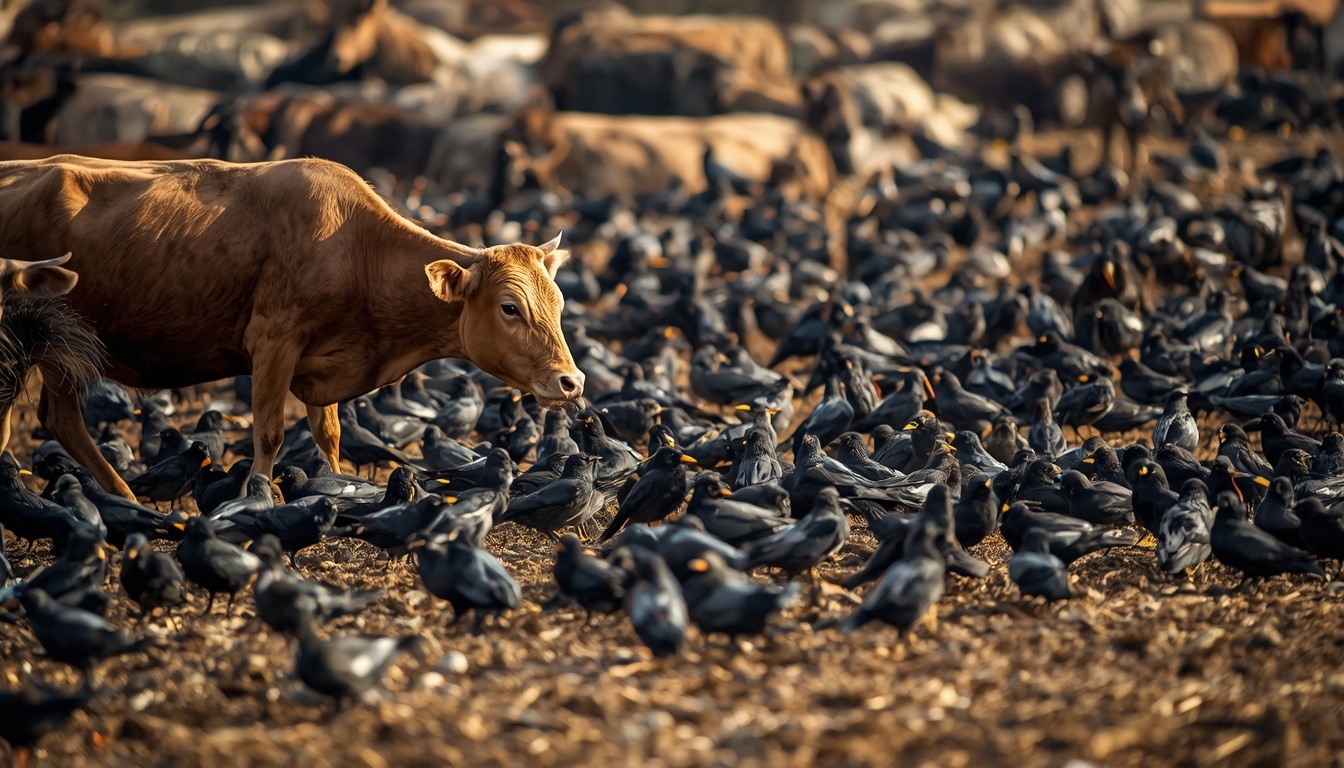

For many feedyards, dairies, and ranches, pest birds are no longer just an annoyance circling overhead. Large flocks of starlings and blackbirds are creating serious operational and financial challenges across the livestock industry. From feed loss and contamination to disease concerns and rising veterinary expenses, producers are being forced to take bird pressure more seriously than ever before.
Federal wildlife officials and agricultural agencies continue warning producers about the growing economic impact of pest birds in cattle operations. As bird populations concentrate around feedyards and dairies during colder months and migratory periods, the cost to livestock producers continues to climb.
Feedyards and dairies provide everything starlings need to survive and thrive:
Once birds establish a feeding pattern at a facility, they often return daily in large numbers. Some operations may see flocks numbering in the thousands during peak migration and winter seasons.
Commodity bays, silage piles, feed bunks, and water troughs all become attractive feeding zones for birds searching for easy calories. Unfortunately, every bird feeding on livestock rations increases losses for the producer.
One of the biggest financial impacts from starlings is direct feed consumption. High-energy cattle rations are expensive, especially during periods of elevated commodity prices. Birds feeding from bunks and storage areas can consume large amounts of feed over time.
Even moderate bird pressure can create noticeable losses when flocks return day after day. Large roosting populations multiply the problem quickly, especially in open feeding systems.
Beyond the direct feed loss, birds also scatter and spoil feed, reducing feed efficiency and creating additional waste around feeding areas.
The problem goes far beyond feed consumption alone. Pest birds contaminate feed and water sources with droppings, feathers, and debris. This contamination introduces both sanitation and health concerns for livestock operations.
Bird droppings around feed bunks, commodity storage, and waterers increase the risk of:
Many producers underestimate how quickly contamination spreads when large flocks repeatedly occupy the same areas.
Federal wildlife and agricultural agencies have repeatedly highlighted the connection between pest birds and disease risks within livestock environments.
Starlings and blackbirds are associated with the spread of pathogens including:
As concerns around biosecurity continue growing throughout agriculture, producers are placing greater emphasis on reducing bird activity near livestock facilities.
Bird pressure also increases stress on cattle environments by creating unsanitary feeding conditions and elevating exposure risks around feed and water systems.
Operations experiencing chronic bird pressure often see indirect financial losses that extend beyond feed disappearance.
Increased contamination and disease exposure can contribute to:
For dairies, bird contamination around feeding areas may also affect milk production environments and increase sanitation demands across the facility.
Over time, the combined cost of feed loss, contamination, labor, and animal health concerns can become substantial.
In 2026, bird management has become more closely tied to overall agricultural biosecurity efforts. Ongoing concerns surrounding avian influenza and wildlife disease transmission have increased awareness about the role wild birds play around livestock facilities.
As a result, more producers are treating bird control as part of their herd health and operational protection strategy instead of simply viewing it as a nuisance issue.
Livestock operators are increasingly investing in:
The goal is not simply reducing bird numbers, but protecting feed investments, maintaining cleaner facilities, and reducing long-term operational risks.
One of the biggest mistakes producers make is waiting until bird populations become overwhelming before taking action. Once large flocks establish reliable feeding and roosting patterns, control becomes significantly more difficult.
Early intervention allows operations to:
Consistent monitoring and proactive management are becoming essential parts of modern feedyard and dairy operations.
Starlings and blackbirds are creating growing challenges for feedyards, dairies, and ranches across the country. What may begin as a few birds feeding near bunks can quickly develop into a major operational problem involving feed loss, contamination, disease concerns, and rising costs.
As agriculture continues placing greater emphasis on biosecurity and operational efficiency, pest bird management is becoming an increasingly important part of protecting livestock facilities. Producers who address bird pressure early are often better positioned to reduce losses, maintain cleaner operations, and protect the health of their animals over the long term.