Food safety has always been a priority, but today it's becoming more visible, and more accountable, than ever before.
The U.S. food industry is entering a new era of traceability, where manufacturers, processors, warehouses, and distribution centers are expected to quickly identify where food came from, where it went, and every point it touched along the way. When contamination occurs, investigators are looking for answers faster than ever.
For facility managers, this shift means that bird control is no longer just about keeping a building clean. It's about protecting products, maintaining compliance, and reducing the risk of costly recalls.
Why the FDA Is Tightening Food Traceability Requirements
In recent years, foodborne illness outbreaks have resulted in nationwide recalls, significant financial losses, and damaged consumer trust. In many cases, it took investigators days, or even weeks, to determine where contaminated products originated.
To address this problem, the FDA introduced the Food Safety Modernization Act (FSMA) Food Traceability Rule (Section 204). The goal is simple:
- Identify contaminated food faster.
- Remove affected products from the supply chain more quickly.
- Reduce illnesses and deaths.
- Minimize unnecessary recalls.
- Improve transparency throughout the food supply chain.
Rather than recalling every product from an entire production run, companies with strong traceability systems can often isolate the affected products more precisely, saving both time and money.
For facility managers, this means every potential contamination source inside the facility receives greater scrutiny, including pest birds.
Every Contamination Source Matters
Modern traceability doesn't stop at ingredients.
Investigators also evaluate environmental conditions within a facility that could have contributed to contamination. This includes sanitation practices, employee procedures, equipment maintenance, and pest activity.
Birds introduce multiple contamination risks because they move freely between rooftops, parking lots, agricultural fields, dumpsters, and processing facilities.
Unlike many pests, birds can travel miles each day before landing on your property.
How Birds Can Contaminate Food Facilities
A single bird may not seem like a major concern, but even small amounts of bird activity can create significant risks.
Common contamination pathways include:
Ingredients
Open receiving areas, grain storage, feed ingredients, and bulk materials can all become contaminated by bird droppings or feathers before production even begins.
Packaging
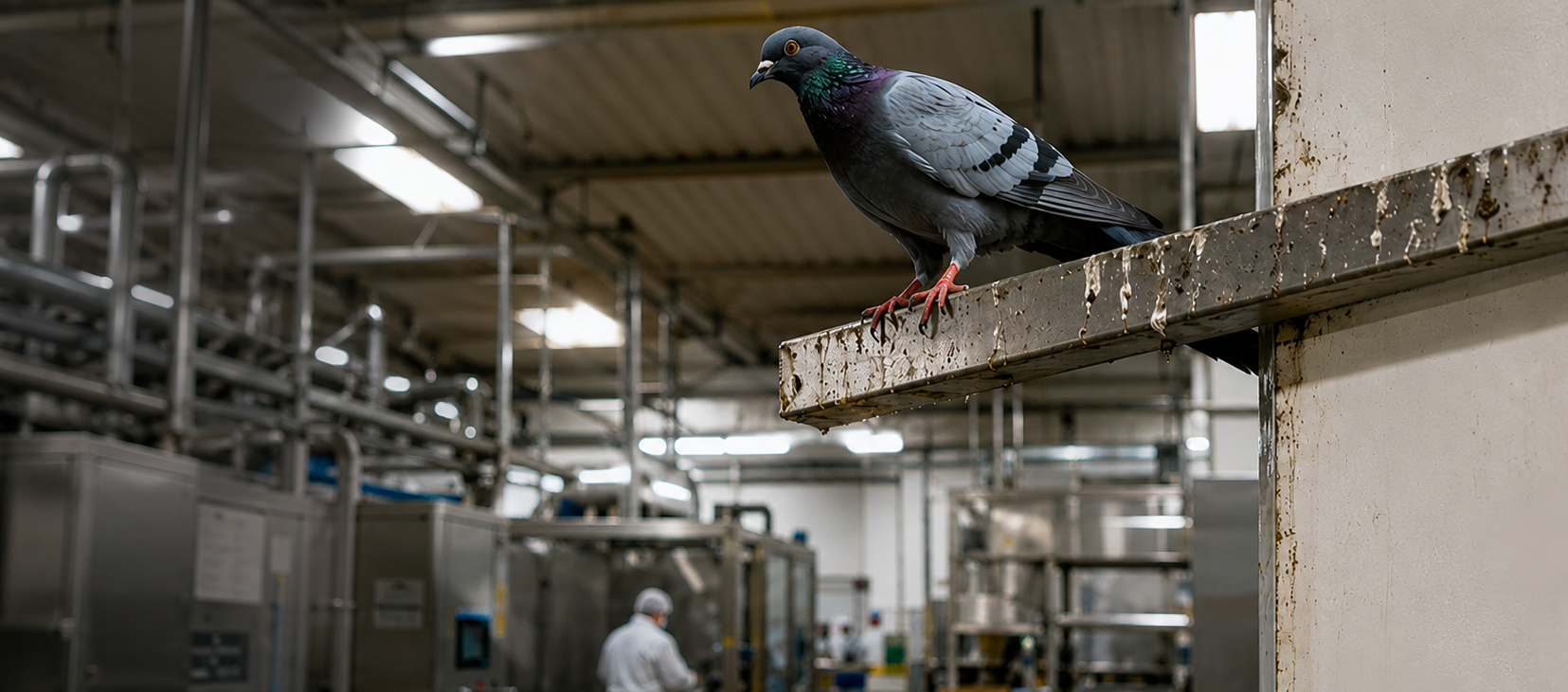
Birds frequently perch on rafters, roof structures, loading docks, and warehouse shelving.
Droppings falling onto packaging materials may contaminate products before they ever leave the facility.
Production Equipment
When birds gain access to manufacturing areas, droppings can land on:
- Conveyors
- Mixers
- Filling equipment
- Storage tanks
- Production lines
Cleaning these areas often requires production downtime and extensive sanitation.
Finished Products
Products awaiting shipment are especially vulnerable if birds have access to warehouses or loading docks.
Even if food itself isn't directly contaminated, damaged packaging or visible bird droppings can trigger product rejection or customer complaints.
Traceability Makes Root Cause Investigations Faster
When contamination is discovered today, investigators work backward through the supply chain to determine where it occurred.
Questions may include:
- Where was the product stored?
- Which production line handled it?
- What sanitation records exist?
- Were pest sightings documented?
- Were birds observed around receiving docks or warehouse entrances?
- Were corrective actions taken?
Facilities with documented bird management programs are often better prepared to answer these questions quickly.
The Cost of a Recall Goes Far Beyond the Product
Food recalls involve much more than replacing inventory.
Companies may face:
- Production shutdowns
- Disposal costs
- Emergency sanitation
- Regulatory investigations
- Lost customer confidence
- Contract penalties
- Increased insurance costs
- Brand damage
Even recalls unrelated to bird contamination often prompt companies to evaluate every possible contamination source, including pest birds.
High-Risk Areas Facility Managers Should Inspect
Birds are opportunistic. They look for food, water, shelter, and protected nesting locations.
Common problem areas include:
Loading Docks
Open dock doors provide easy access to warehouses and processing areas.
Rooflines and HVAC Equipment
Warm mechanical equipment often attracts nesting birds.
Grain and Ingredient Storage
Spilled product attracts pigeons, sparrows, and starlings.
Outdoor Waste Areas
Overflowing dumpsters provide reliable food sources.
Utility Openings
Small gaps around pipes, conduits, and vents can allow birds inside.
Routine inspections of these areas can prevent small bird issues from becoming larger contamination risks.
Bird Control Is Becoming Part of Food Safety
Many facilities already invest heavily in:
- Employee hygiene
- Environmental monitoring
- Equipment sanitation
- Pest management
- Preventive maintenance
Bird management should be viewed as another essential layer of food safety.
An integrated bird control program may include:
- Exclusion methods
- Netting
- Bird spikes where appropriate
- Habitat modification
- Sanitation improvements
- Professional bird management strategies
- Routine inspections and monitoring
The goal isn't simply removing birds, it's preventing them from becoming part of your contamination risk.
Documentation Is Just as Important as Prevention
Effective food safety programs rely on documentation.
Facility managers should maintain records of:
- Bird inspections
- Sighting reports
- Nest removal (where legally permitted)
- Corrective actions
- Preventive maintenance
- Exclusion repairs
- Contractor service reports
These records demonstrate that bird risks are being actively managed rather than ignored.
Proactive Bird Control Protects More Than Compliance
As food traceability requirements continue to evolve, facilities are expected to identify and reduce contamination risks before they become incidents.
Pest birds may seem like a minor nuisance, but they can compromise ingredients, packaging, equipment, and finished products while increasing the complexity of contamination investigations.
The most effective approach is proactive prevention. By incorporating bird management into your overall food safety and facility maintenance program, you reduce contamination risks, support regulatory compliance, protect your brand, and help ensure your operation continues running without unnecessary disruptions.
In today's food industry, traceability doesn't just track where food has been, it also shines a spotlight on every environmental factor that could have affected it. Keeping birds out of your facility is one of the simplest ways to strengthen that chain of protection.