Poultry Farms
Bird Flu
Avian Influenza
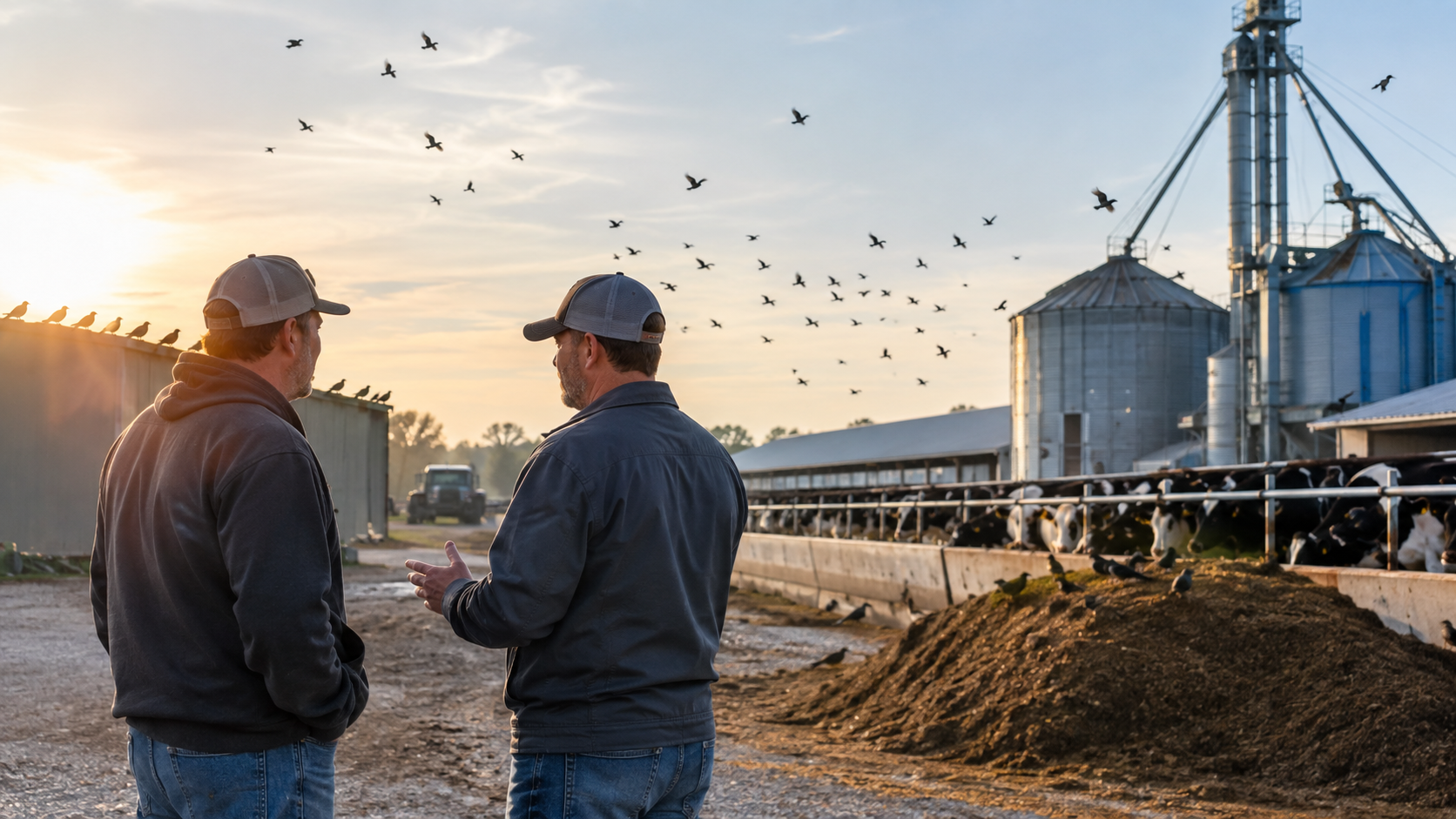

If you're selling feed, grain, animal health products, equipment, or other agricultural supplies, you're already having conversations with the people who need to think about bird pressure.
The problem is, bird control usually isn't the reason they called you.
They're calling about feed.
They're talking about cattle.
They're asking about pricing.
They're checking on delivery.
They're discussing what's happening around the operation.
So how do you bring up birds without turning the conversation into a sales pitch?
Ask one simple question:
“Are you getting covered up with birds yet?”
It may seem like a small question.
But that last word-yet-changes the conversation.
When you ask a customer:
“Do you have a bird problem?”
you're asking them to make a judgment.
They have to decide whether what they're seeing qualifies as a "problem."
Maybe they've got 20 birds around the feed.
Maybe they've got 200.
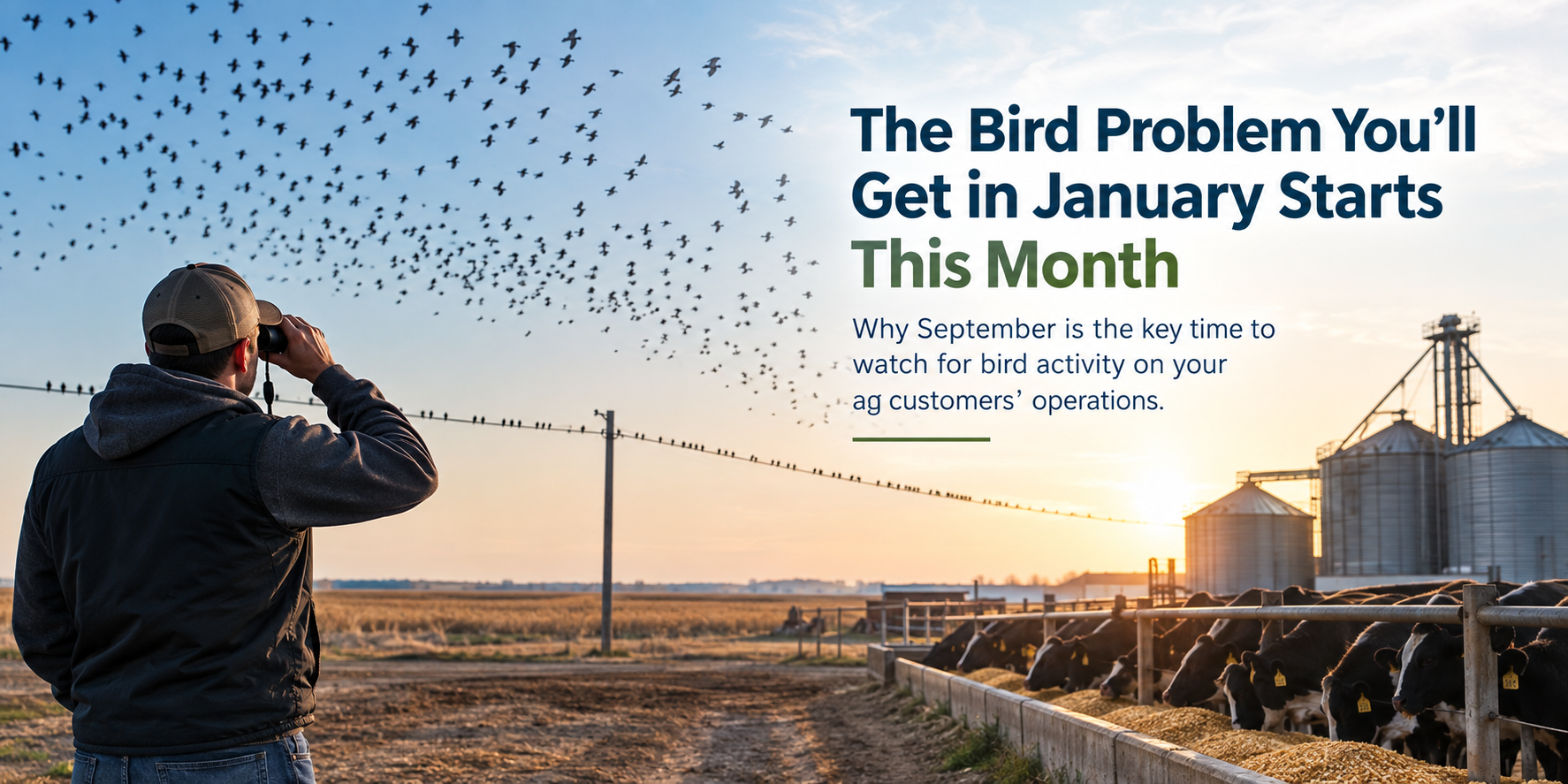
Maybe they're seeing thousands of starlings starting to show up.
They may not consider any of that a problem yet.
So you get:
“Not really.”
And the conversation is over.
Instead, ask:
“Are you getting covered up with birds yet?”
Now you're asking them what they're actually seeing.
You're not telling them they have a problem.
You're not trying to scare them.
You're simply opening the door for them to tell you what's happening on their operation.
And that's where the conversation gets interesting.
The word yet creates a completely different type of question.
It acknowledges that bird pressure can change.
A customer might not be dealing with a major bird concentration today.
But that doesn't mean the situation will look the same a few weeks from now.
As fall progresses, agricultural operations can become increasingly attractive to birds because of available food, water, shelter, spilled grain, livestock feed, waste grain, and other resources.
Bird activity can change quickly.
One week, a customer may say:
“We're not seeing many.”
A few weeks later:
“Yeah, they're starting to show up.”
And eventually:
“They're everywhere.”
That progression is exactly why this is a good conversation to have before the customer feels like he has a major problem.
The biggest advantage for an ag distributor is that you don't have to create a completely separate bird-control sales call.
You're already talking to the customer.
You're already asking questions about the operation.
You're already discussing feed consumption, storage, livestock, equipment, deliveries, and seasonal changes.
Birds can simply become another question.
For example:
“How's the feed situation looking?”
Then:
“How's everything around the bunks?”
Then:
“Are you getting covered up with birds yet?”
That's it.
You don't need a 15-minute bird-control presentation.
You don't need to immediately start talking about products.
You don't even need to convince the customer that birds are a problem.
You're simply finding out what they're seeing.
The customer's answer can tell you a lot.
That's fine.
Don't force the conversation.
You can simply say:
“That's good. Keep an eye on them as we get further into fall.”
You've planted the seed.
Now you have an opening.
Ask:
“Where are you seeing them?”
The answer matters.
Are they around the feed bunk?
On top of a silage pile?
Around grain storage?
On power lines?
In nearby fields?
Around the livestock?
At the commodity area?
The customer may reveal more about the situation simply by describing where the birds are.
Now you have a much more specific conversation.
Ask:
“What kind are you seeing?”
Then:
“Where are they concentrating?”
Then:
“What are they getting into?”
You are no longer having a generic bird conversation.
You're learning about the customer's actual operation.
When you're talking to an ag customer, pay attention to three basic things:
Food. Water. Shelter.
Agricultural operations can provide all three.
Feed and spilled grain can provide food.
Water sources can provide drinking opportunities.
Buildings, trees, structures, equipment, and other areas can provide shelter or roosting locations.
That's why bird activity around an agricultural operation isn't always random.
If the conditions are right, birds have a reason to stay.
And once a customer starts seeing increasing bird pressure, it's useful to understand where the birds are coming from, where they're going, and what is attracting them.
Fall is an especially useful time to start asking customers about bird activity.
Why?
Because you're getting ahead of the conversation.
Instead of waiting until the customer is frustrated with birds covering an operation, you're asking what they're seeing while the situation is developing.
Think about it like any other seasonal issue.
You don't wait until winter to start thinking about winter.
You prepare before the conditions arrive.
Bird pressure can work the same way.
A few birds today may not seem important.
But if the customer notices increasing numbers week after week, that's a signal worth paying attention to.
One of the easiest things to overlook is feed and grain spillage.
A little spilled material may not seem significant.
But birds don't need much to find an attractive food source.
Around agricultural operations, look at areas where grain or feed may accumulate:
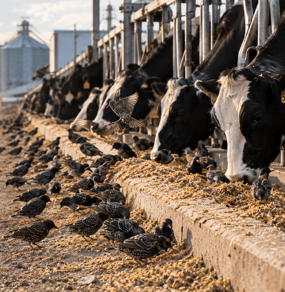
The point isn't that every small amount of spillage automatically creates a bird problem.
It's that these are places worth looking at.
And that's another reason the question works.
Instead of telling the customer what the problem is, you're getting them to start looking for it.
You don't need a complicated script.
You don't need to turn every customer conversation into a bird-control presentation.
Just remember one question:
“Are you getting covered up with birds yet?”
That last word matters.
Yet.
Because you're not telling the customer they have a problem.
You're asking what they're seeing right now.
And sometimes, one simple question is all it takes to uncover a problem before it gets much bigger.