Bird Flu
Avian Influenza
Property Manager


Hospitals have a zero-tolerance approach to many of the risks associated with pest birds. From droppings around entrances to contamination concerns near air intakes, house sparrows can create sanitation challenges that require a carefully planned bird control strategy.
But when choosing a sparrow bait for a sensitive environment, there is another important consideration: secondary poisoning risk.
That is why we developed Avitrol Easy Blend for sensitive sites where minimizing bird mortality is a priority.
House sparrows can nest around building entrances, loading areas, rooflines, and other sheltered locations. As their numbers increase, so can the problems associated with droppings, nesting materials, and persistent bird activity.
Bird droppings can contaminate surfaces and contribute to sanitation concerns. Nesting materials may also obstruct vents and create maintenance issues.
Hospitals need a bird control strategy that considers these risks while accounting for the sensitivity of the surrounding environment.
Avitrol Easy Blend was designed for locations where minimizing bird mortality is a priority, including hospitals, schools, airports, and other sensitive facilities.
Its pre-measured formulation is mixed at a 1:40 ratio with untreated grain, allowing pest management professionals to prepare the bait according to label directions.
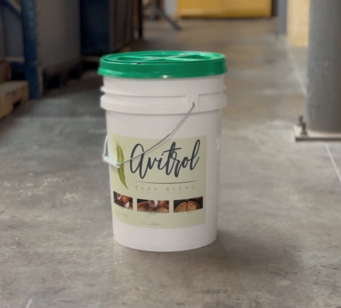
The goal is to manage house sparrow activity while minimizing mortality, making Easy Blend an option to consider when developing a bird control plan for sensitive sites.
The product must be used strictly according to its approved label, with appropriate precautions to protect people and non-target animals.
Secondary poisoning occurs when a predator or scavenger is exposed to a toxic substance by eating an animal that has ingested it.
Avitrol baits do not cause secondary poisoning. When a predator or scavenger eats a bird that has consumed Avitrol bait, eating the bird’s meat does not poison the animal. This makes secondary poisoning a different concern from the direct ingestion of treated bait, which is why proper bait placement and non-target animal precautions remain essential.
That distinction matters when evaluating bird control options for sensitive environments.
However, minimizing secondary exposure does not mean a product is harmless if another animal directly consumes treated bait. Avitrol's active ingredient can be affect birds and mammals that ingest it, which is why correct application, careful bait placement, and protection of non-target animals are essential.
For hospitals, these precautions should be part of the site-specific bird management plan, not an afterthought.
Baiting should be one part of a broader approach to bird management. Before selecting a product, pest management professionals should assess where sparrows are feeding, nesting, and roosting.
A comprehensive plan may include:
Hospitals require a thoughtful approach to pest bird management. The objective is to address sparrow activity without overlooking the facility's unique sanitation, safety, and environmental considerations.
Avitrol Easy Blend was developed for sensitive sites where minimizing bird mortality is important. Combined with proper application, non-target precautions, and a broader bird management strategy, it can be considered as part of a professional house sparrow control program.
Need help determining whether Easy Blend is appropriate for your site? Contact Avitrol to discuss your bird control challenges and identify the right approach for your facility.
Always read and follow the current product label and applicable federal, state, and local requirements.