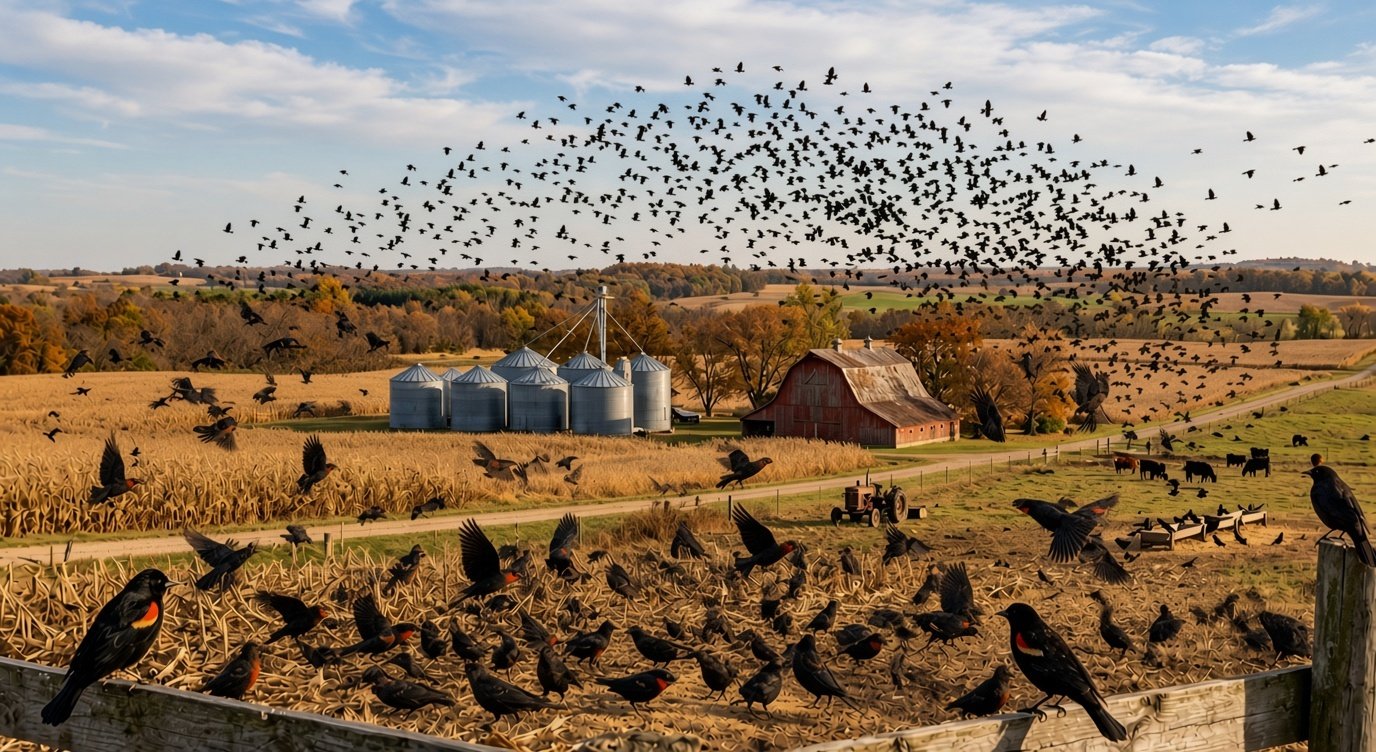
When most people think about bird control, they probably think about bird droppings on buildings, nesting on rooftops, or birds gathering around food.
But local governments are dealing with a much more expensive problem: birds and other wildlife creating serious safety hazards around airports.
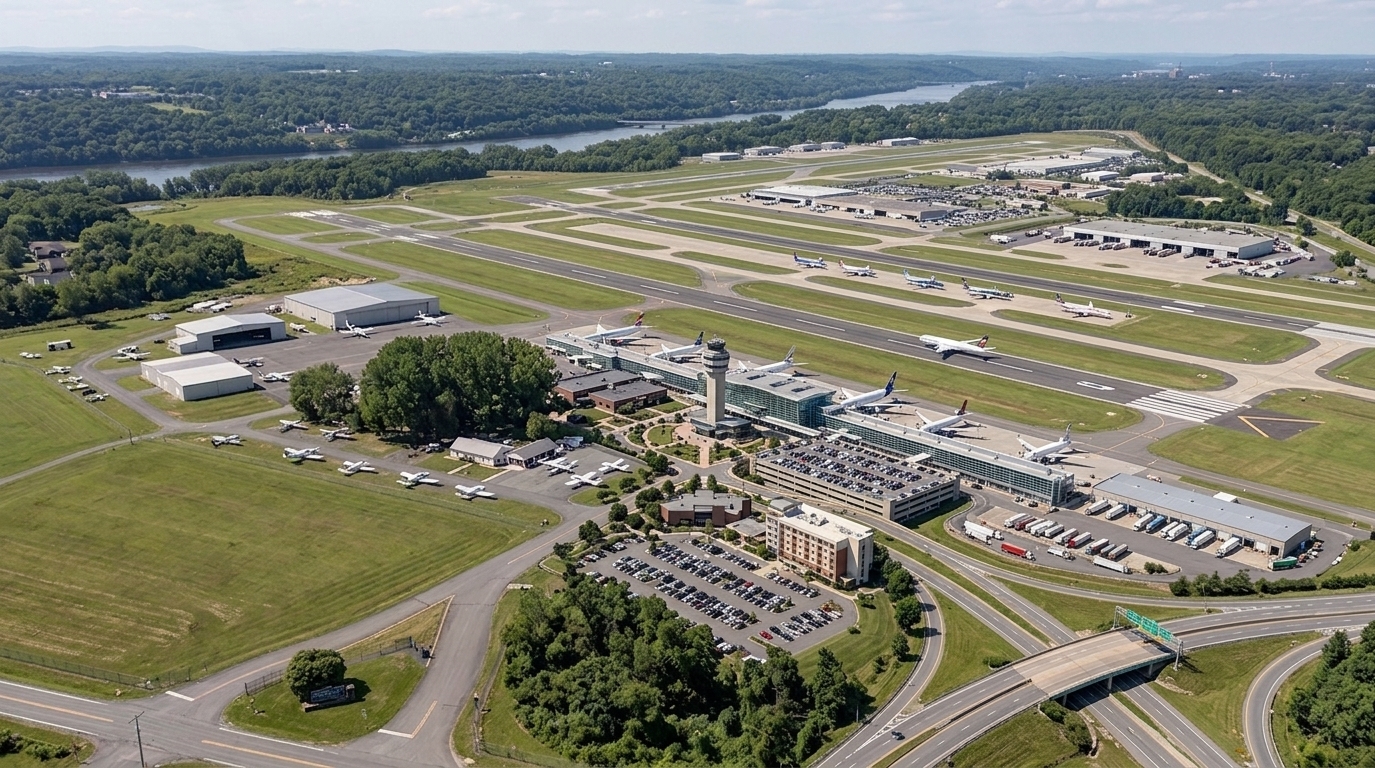
A recent project at Schenectady County Airport in New York provides a striking example.
The county is moving forward with a wildlife hazard mitigation project that involves removing approximately 12.5 acres of tree vegetation from the airport environment. The purpose is to reduce wildlife hazards and improve aviation safety. The project is being supported through federal aviation funding.
And the price tag is significant.
$1.35 Million for Wildlife Mitigation
Schenectady County's adopted 2026 capital budget lists $1.35 million for implementing its wildlife mitigation plan, specifically involving tree-clearing design and construction.
The project didn't simply appear overnight.
County documents have previously identified the wooded area as a primary cause of wildlife incursions at the airport. The county has also stated that it continues to mitigate hazardous wildlife attractants in order to comply with USDA and FAA requirements.
The county's airport averages approximately 163 flight operations every day, making wildlife management a serious operational and safety concern.
The first phase alone received $189,428 in federal aviation funding for design of the 12.5-acre tree-removal project.
That means taxpayers and federal aviation funding are supporting a project that could ultimately cost approximately $1.35 million to implement.
And that raises an important question:
Are there more cost-effective ways to reduce bird pressure before expensive physical modifications become necessary?
The Real Cost of a Bird Problem
The Schenectady County project demonstrates something facility managers should pay attention to:
Bird problems can become infrastructure problems.
Once birds become established around an airport, manufacturing facility, agricultural operation, warehouse, food-processing plant, or public building, the solution may no longer be as simple as putting up a few deterrents.
Vegetation may have to be removed. 
Roosting areas may need to be redesigned.
Buildings may need physical modifications.
Nesting areas may need to be sealed.
Drainage and water sources may need to be changed.
And in environments where wildlife creates a safety hazard, governments may ultimately spend hundreds of thousands or even millions of dollars modifying the property itself.
Schenectady County's project is a perfect example.
The county isn't spending this money because trees are inherently a problem.
It's spending the money because the combination of habitat and wildlife activity creates an aviation safety risk.
Could Bird Control Reduce the Need for Expensive Modifications?
This is where proactive bird management becomes interesting.
A targeted bird-control program can address the birds themselves rather than relying entirely on physical changes to the property.
Avitrol products are designed for specific bird-control applications and can provide a tool for managing certain nuisance bird populations when used according to the product label and applicable federal, state, and local requirements.
That distinction is important.
Bird control isn't necessarily a replacement for habitat modification.
In some situations, habitat modification is exactly what regulators and wildlife specialists require.
But in other situations, controlling bird activity can be part of a broader integrated wildlife-management strategy, and potentially prevent a bird population from becoming established in the first place.
What Could $1.35 Million Buy in Bird Prevention?
Consider the scale of Schenectady County's project.
The county's budget identifies approximately $1.35 million for the design and construction associated with the 12.5-acre wildlife mitigation project.
That's roughly $108,000 per acre if the entire $1.35 million is attributed evenly across the 12.5 acres.
Of course, that's only a simple calculation, not an actual per-acre construction cost. Airport projects include engineering, design, regulatory requirements, equipment, labor, site preparation and other expenses.
But it illustrates the bigger point:
Physical wildlife mitigation can become extremely expensive.
A proactive bird-management program, by comparison, can be designed around the actual bird pressure at a facility and scaled according to the size and severity of the problem.
Rather than waiting until birds become a major operational or safety issue, facility managers can monitor bird activity and intervene early.
Prevention Is Usually Cheaper Than Infrastructure
This lesson extends far beyond airports.
Think about a food-processing facility.
If birds establish themselves around loading docks, rooflines, HVAC equipment or production areas, the facility may eventually need:
- Bird exclusion systems
- Netting
- Structural repairs
- Roof modifications
- Nest removal
- Sanitation
- Equipment cleaning
- Recurring pest-management services
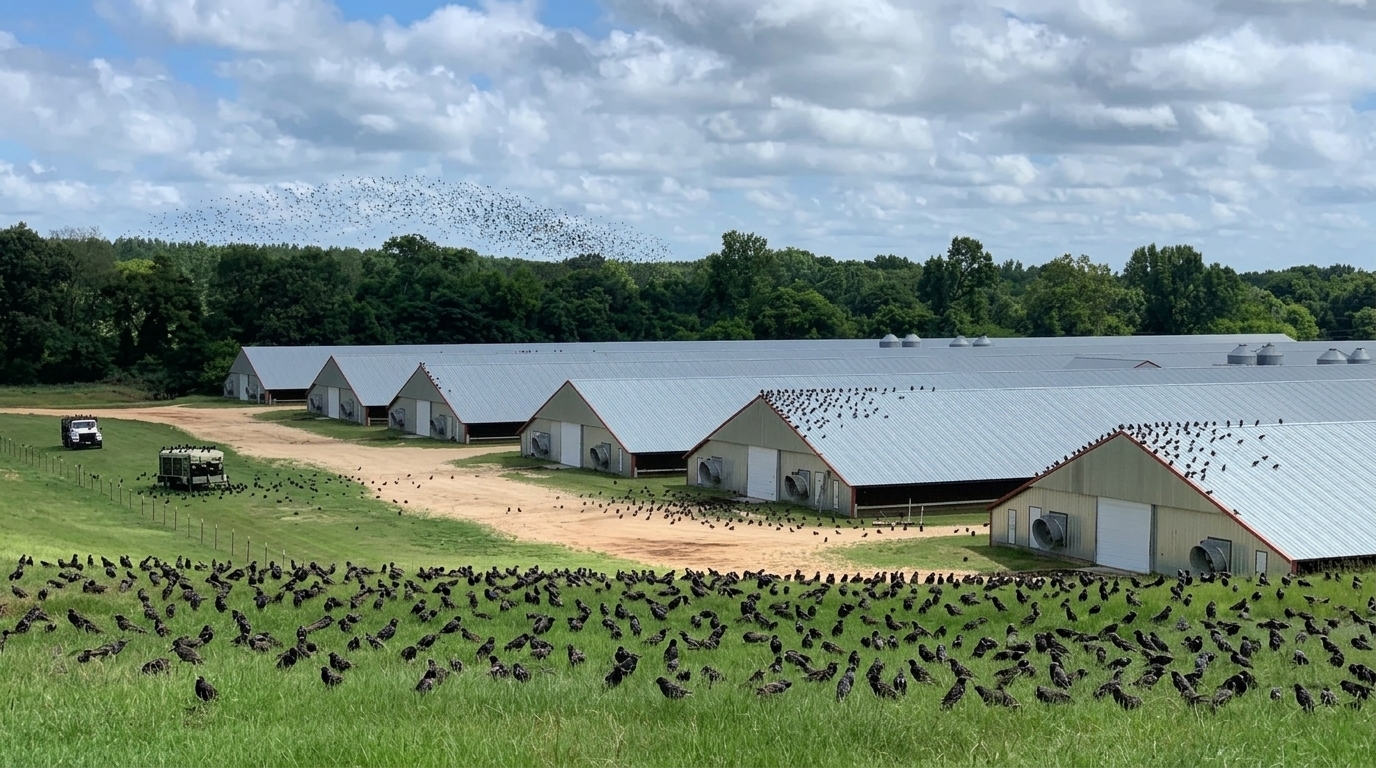
The same thing happens at agricultural facilities.
Birds discover a reliable source of grain.
They return.
The population grows.
Then the facility is forced to respond to an established bird problem rather than preventing one.
That is where proactive bird management can provide value.
The Bigger Government Trend
The Schenectady County project is also part of a much larger trend in government: wildlife hazards are increasingly being treated as infrastructure and public-safety problems.
The FAA maintains an extensive wildlife-hazard management program because wildlife strikes can damage aircraft, disrupt operations and endanger passengers and crews.
And Schenectady County isn't hiding the reason for its project.
Its own documents state that the wooded area is a primary cause of wildlife incursions and that the county continues working to mitigate hazardous wildlife attractants at the airport.
That's the important takeaway for facility managers:
The earlier you address bird activity, the more options you have.
Once birds become an established hazard, the solution can become much more expensive.
Bird Control Should Be Part of the Conversation
The answer isn't necessarily to choose chemical bird control over habitat modification.
It's to look at the entire property and ask:
Why are birds here?
Where are they feeding?
Where are they roosting?
Where are they nesting?
What is attracting them?
How large is the population?
And what happens if the problem gets worse?
For some properties, the answer may be exclusion.
For others, it may involve habitat modification.
For others, a properly managed bird-control program may be an important component of an integrated approach.
The key is addressing the problem before birds force the property owner or government agency into a much more expensive infrastructure project.
The $1.35 Million Lesson
Schenectady County's airport project provides a valuable lesson for anyone responsible for a large facility.
The county has identified wildlife as an aviation safety concern and is investing approximately $1.35 million in a 12.5-acre wildlife mitigation project.
That's a significant investment, but airports aren't the only facilities where birds can create expensive problems.
Food processors, agricultural operations, warehouses, distribution centers, landfills, power plants and public facilities can all become attractive environments for birds.
And once birds become established, getting rid of them can become considerably more difficult.
The best bird-control strategy isn't always the one that reacts to the largest bird problem.
Sometimes, it's the one that prevents the problem from becoming expensive in the first place.
For facilities facing significant bird pressure, a proactive, integrated approach can provide another option to consider before resorting to major physical modifications.
Stop the bird problem before the bird problem becomes an infrastructure project.