Poultry Farms
Bird Flu
Avian Influenza
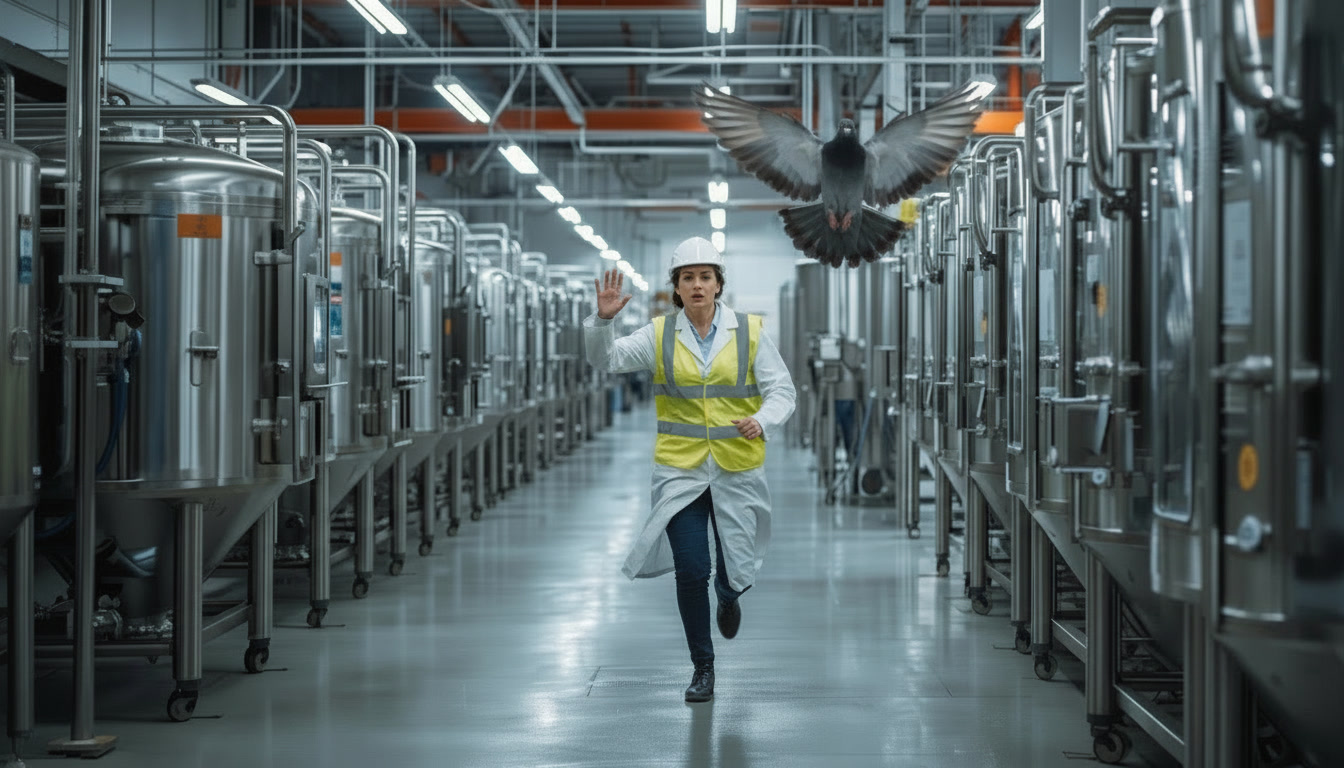

In food and beverage facilities, bird control often becomes a routine task rather than a resolved issue. Teams schedule cleanups, install deterrents, call vendors when activity increases, and move on to the next operational priority. The result is not a solution - it is a cycle.
There is a clear difference between managing bird activity and eliminating the conditions that allow it to exist. Understanding that difference is what separates facilities that struggle year after year from those that successfully bring bird pressure under control.
Most facilities start with good intentions. They respond quickly when bird activity becomes visible or when sanitation concerns are raised. However, the approach is often reactive and fragmented.
Common characteristics of management-focused bird control include:
This approach can reduce visible activity temporarily. It can also create the impression that the situation is under control. But over time, the same patterns return.
Birds re-establish roosting zones. New access points develop. Operational changes create fresh attractants. The facility continues to spend time and money without achieving lasting results.
Managing the problem becomes part of normal operations.
Birds are highly adaptable and driven by survival needs. If a facility consistently provides shelter, food access, warmth, and safety from predators, birds will continue to return regardless of surface-level deterrents.
In many cases, control efforts fail because they focus on symptoms instead of system vulnerabilities.
Examples include: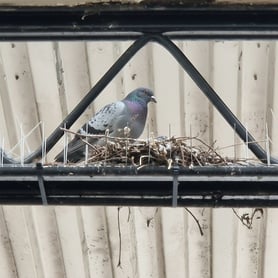
Even strong control products can underperform when used without a full-site strategy.
Without addressing how birds enter, why they stay, and where pressure shifts over time, most solutions simply redistribute the problem.
A permanent fix does not mean birds will never appear near a facility again. In food and beverage environments, that expectation is unrealistic.
What it does mean is that the facility no longer provides the conditions necessary for birds to establish ongoing activity inside or in high-risk operational zones - and that bird pressure is actively disrupted at the population behavior level.
Facilities that successfully end recurring bird problems typically implement a structured approach that includes:
A full evaluation of structural vulnerabilities, operational practices, and environmental attractants. This goes beyond obvious hotspots and examines how birds interact with the entire facility footprint.
In facilities using Avitrol, this assessment also determines where targeted behavioral control can interrupt flock establishment patterns before they become entrenched.
Reducing or eliminating factors that draw birds to the site, such as exposed ingredients, inconsistent waste handling, standing water, and insect-heavy lighting zones.
Avitrol enhances environmental modification efforts by changing how birds perceive the site. When birds consume treated bait, the active ingredient affects the central nervous system, triggering distress signals and erratic behavior that act as a powerful flock dispersal mechanism. Other birds interpret these cues as danger and abandon the location, even if attractants are still intermittently present.
Understanding how bird activity shifts seasonally and operationally. Facilities that resolve long-term problems track trends, not just incidents.
Avitrol programs are most effective when integrated into ongoing pressure mapping - allowing targeted applications during peak migration periods, harvest cycles, or operational changes that increase bird vulnerability or congregation risk.
Treating bird control as a shared responsibility across sanitation, maintenance, quality assurance, and operations. Permanent results rarely come from siloed efforts.
When Avitrol is part of the strategy, coordination becomes even more critical. Proper placement, timing, regulatory compliance, and post-application monitoring require alignment across departments to ensure both effectiveness and audit defensibility.
The science behind Avitrol is rooted in behavioral population disruption, not just removal. Rather than relying solely on physical barriers or lethal population reduction, it leverages flock psychology and survival instincts.
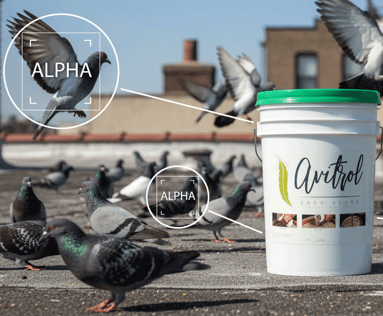
Birds are highly social and risk-sensitive. In every flock, there are alpha birds. When an
alpha of a flock exhibits distress behavior after ingesting treated bait, it signals to the rest of the flock "DANGER. STAY AWAY." Over time, this creates site abandonment conditioning, reducing re-colonization pressure and breaking the cycle of recurring infestations.
When combined with exclusion, sanitation, and operational discipline, this behavioral conditioning is what allows facilities to move from managing bird problems to truly ending them.
Many facility leaders assume that permanent solutions require significantly higher investment. In reality, ongoing management often becomes more expensive over time due to:
Facilities that move toward long-term resolution often shift spending from repeated short-term fixes to targeted corrective actions that reduce future dependence on emergency responses.
Ending a bird problem is not only about tools or products. It requires a shift in how facilities define success.
If the goal is simply to reduce visible mess before inspections, management-focused tactics may appear sufficient.
If the goal is to control contamination risk, stabilize audit performance, and protect brand integrity, a deeper strategy is necessary.
Permanent results come from addressing the system that allows bird activity to persist - not just the birds themselves.
Facilities that successfully resolve bird pressure tend to reach a turning point. They recognize that repeated vendor calls and temporary deterrents are maintaining a status quo rather than changing outcomes.
At that stage, bird control becomes less about responding to the latest incident and more about building a defensible, sustainable risk management program.
That is the difference between living with a bird problem and finishing it.