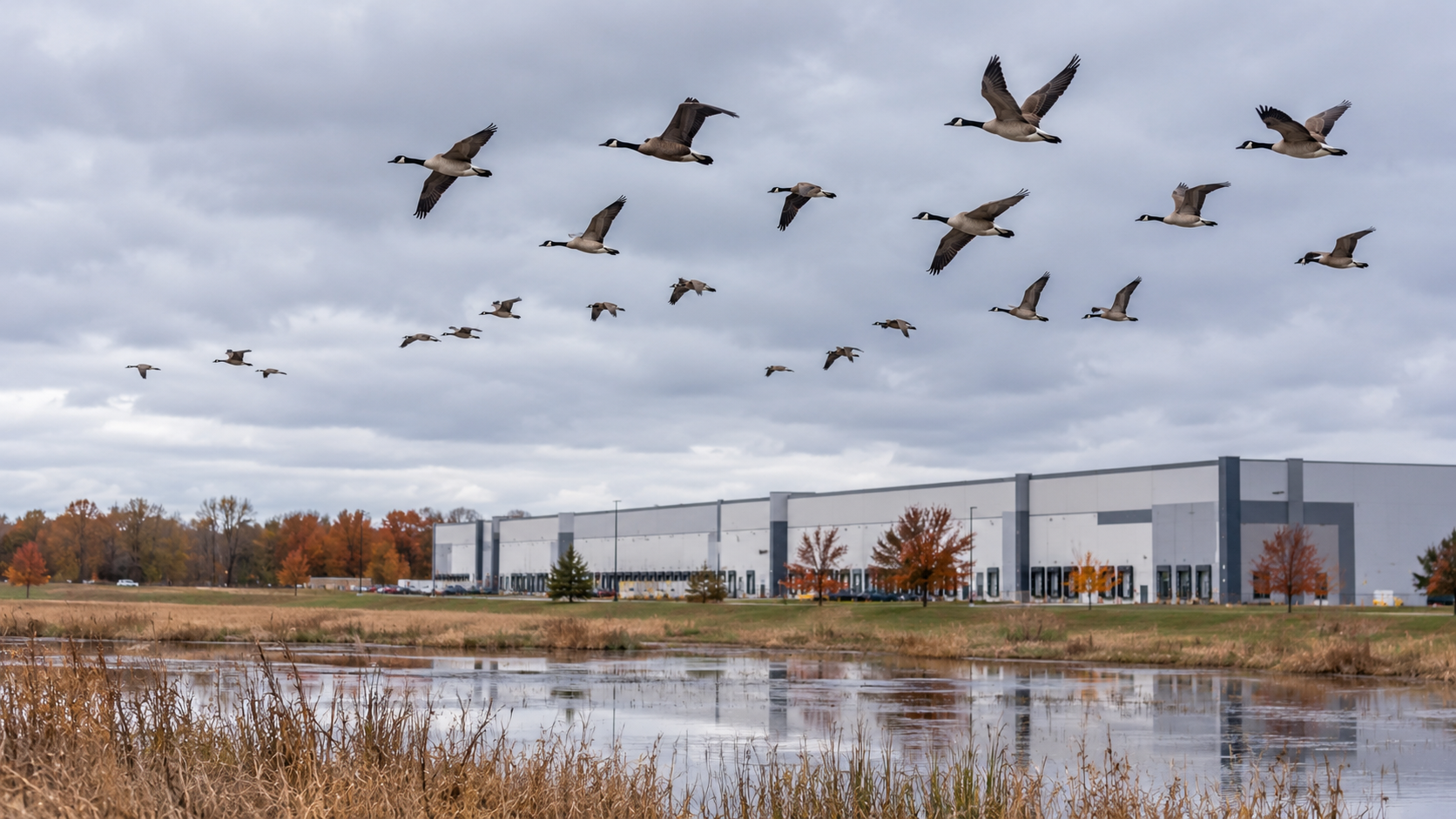
Large flocks of starlings and blackbirds can create serious problems for commercial properties, especially during the winter months.
According to the USDA's Animal and Plant Health Inspection Service (APHIS), winter populations of European starlings, blackbirds, and crows are estimated at 750 million to 1 billion birds combined.
For facility managers, that number represents more than a wildlife concern. Large bird populations can lead to extensive roosting activity, accumulating droppings, sanitation problems, and costly property maintenance.
Here is why commercial facilities should pay attention.
How Large Bird Populations Affect Commercial Properties
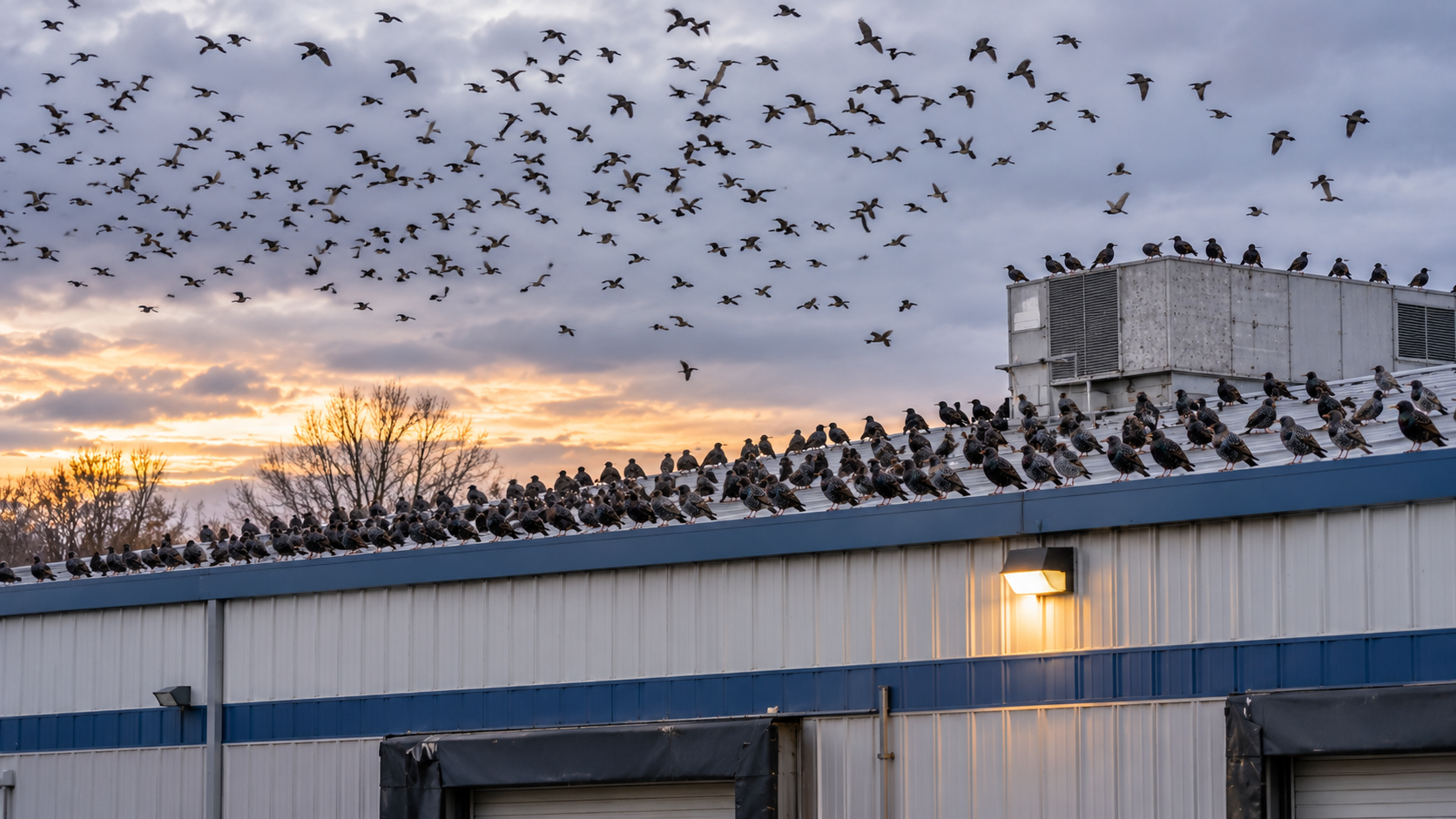
Starlings and blackbirds are known to gather in large flocks, particularly when looking for suitable places to roost.
Trees, rooftops, building structures, and other sheltered areas can provide attractive overnight locations.
This can become a problem for properties with features that offer birds protection from weather and predators.
Warehouses, manufacturing plants, shopping centers, distribution facilities, and commercial buildings may all provide opportunities for birds to gather.
What starts as a few birds around a building can eventually turn into a much larger roosting problem.
Why Birds Choose Commercial Buildings
Commercial properties can offer several things that birds look for when selecting a roosting location.
Some common areas include:
- Rooftops and ledges: Elevated areas can provide sheltered places to rest.
- Building overhangs: Protected spaces can offer cover from wind and weather.
- HVAC equipment: Rooftop equipment and surrounding structures can create additional perching opportunities.
- Trees and landscaping: Mature trees near buildings can attract large overnight roosts.
- Loading docks and structural openings: Certain building features may provide shelter and access to protected areas.
When these features are combined with nearby food and water sources, a property may become increasingly attractive to nuisance birds.
The Hidden Costs of Large Bird Roosts
The biggest issue with large bird populations is not always the birds themselves. It is what they leave behind.
When hundreds or thousands of birds gather in the same location overnight, droppings can accumulate quickly.
Over time, this can create several problems for facility managers.
Health and sanitation concerns
Bird droppings can contain disease-causing organisms. Accumulations around entrances, walkways, loading areas, and ventilation equipment can create sanitation concerns for employees, customers, and visitors.
Slippery walking surfaces
Droppings on sidewalks, entryways, stairs, and loading docks can create slippery conditions and increase the risk of falls.
Building and equipment damage
Bird waste can contribute to corrosion and deterioration of building materials, roofing components, and equipment when left untreated.
Increased maintenance expenses
Repeated cleaning, repairs, and labor can become expensive, especially when birds continue returning to the same roosting locations.
The longer a large roost remains established, the more difficult and costly the problem can become.
Five Areas Facility Managers Should Inspect
If your property is experiencing increased bird activity, start by identifying where birds are gathering.
Pay particular attention to:
- Rooftops: Look for birds resting along rooflines, equipment, and elevated structures.
- Building ledges: Check overhangs, signs, exterior beams, and other protected surfaces.
- Parking lots: Inspect light poles, trees, and structures where birds may gather overnight.
- Loading docks: Look for droppings, nesting activity, and birds gathering around sheltered areas.
- HVAC and ventilation systems: Check equipment and nearby openings for bird activity and accumulated waste.
Look for patterns. Are birds returning to the same areas every evening? Are droppings accumulating in particular locations? Are nearby trees or structures serving as overnight roosts?
These observations can help determine the size and scope of the problem.
Why Waiting Can Make Bird Problems Worse
One of the biggest mistakes facility managers can make is waiting until bird activity becomes overwhelming.
Large roosting populations can create recurring maintenance problems. Cleaning up droppings may address the immediate mess, but it does not prevent birds from returning.
Effective bird management starts with understanding why birds are using the property and identifying the conditions that attract them.
Depending on the site, a management plan may involve:
- Removing accessible food and water sources.
- Installing appropriate exclusion methods.
- Addressing common roosting and perching locations.
- Monitoring bird activity and identifying patterns.
- Using appropriate bird management strategies based on the species and property conditions.
No single solution works for every building. The right approach depends on the bird species, the size of the population, the facility layout, and applicable wildlife regulations.
Is Your Facility Prepared for Winter Bird Activity?
With winter bird populations reaching significant numbers, commercial properties should not overlook the potential for large-scale roosting activity.
Starlings and blackbirds can turn rooftops, trees, parking lots, and building structures into overnight gathering locations. The resulting droppings, sanitation concerns, and maintenance costs can quickly become a facility-management issue.
The best time to address a bird problem is before it becomes a major cleanup and maintenance expense.
Take a look around your property. Are birds beginning to gather in the same locations every evening?
Identifying the problem early can help you develop a plan before large roosts become established.