
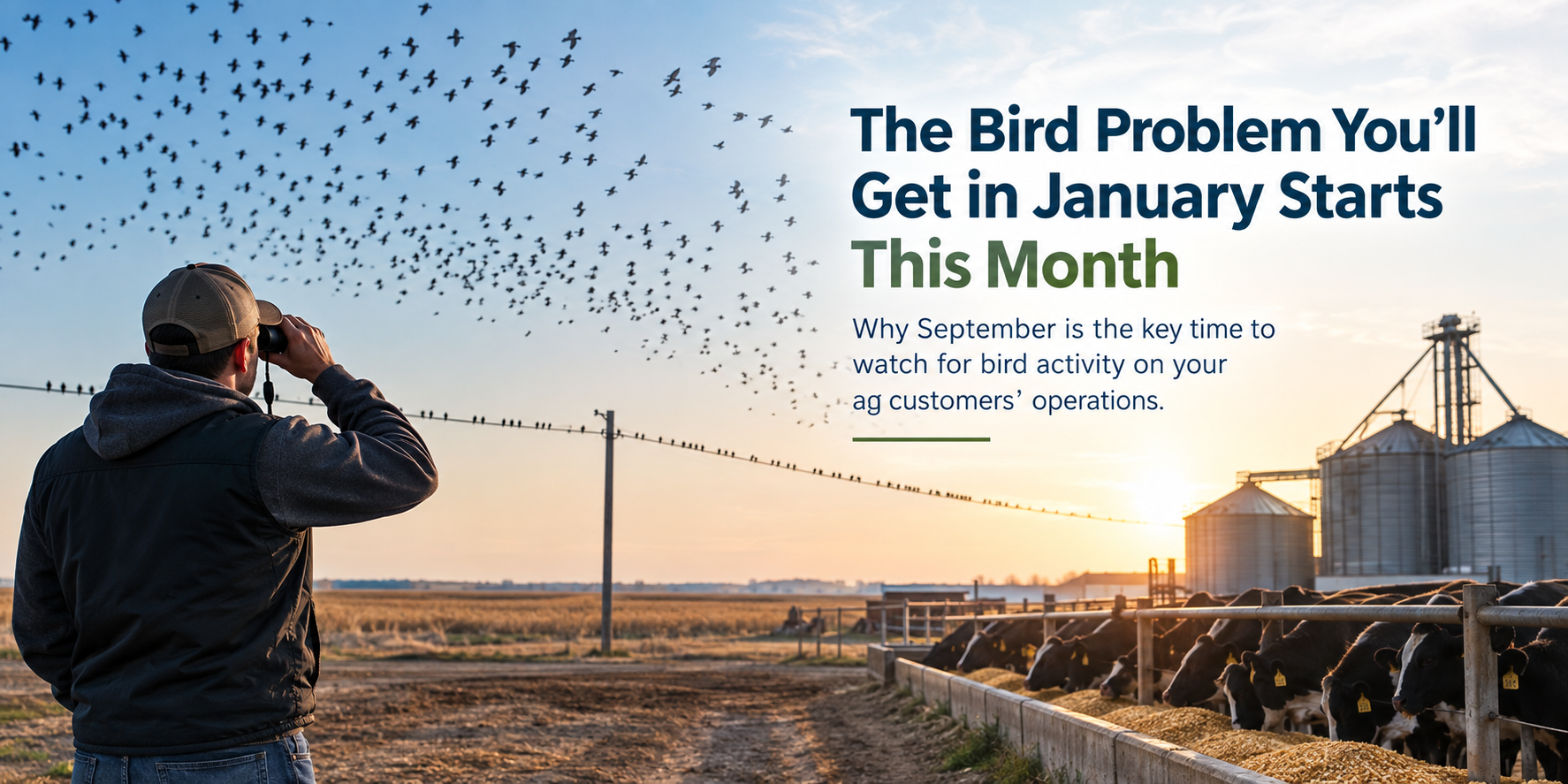
Poultry Farms
Bird Flu
Avian Influenza
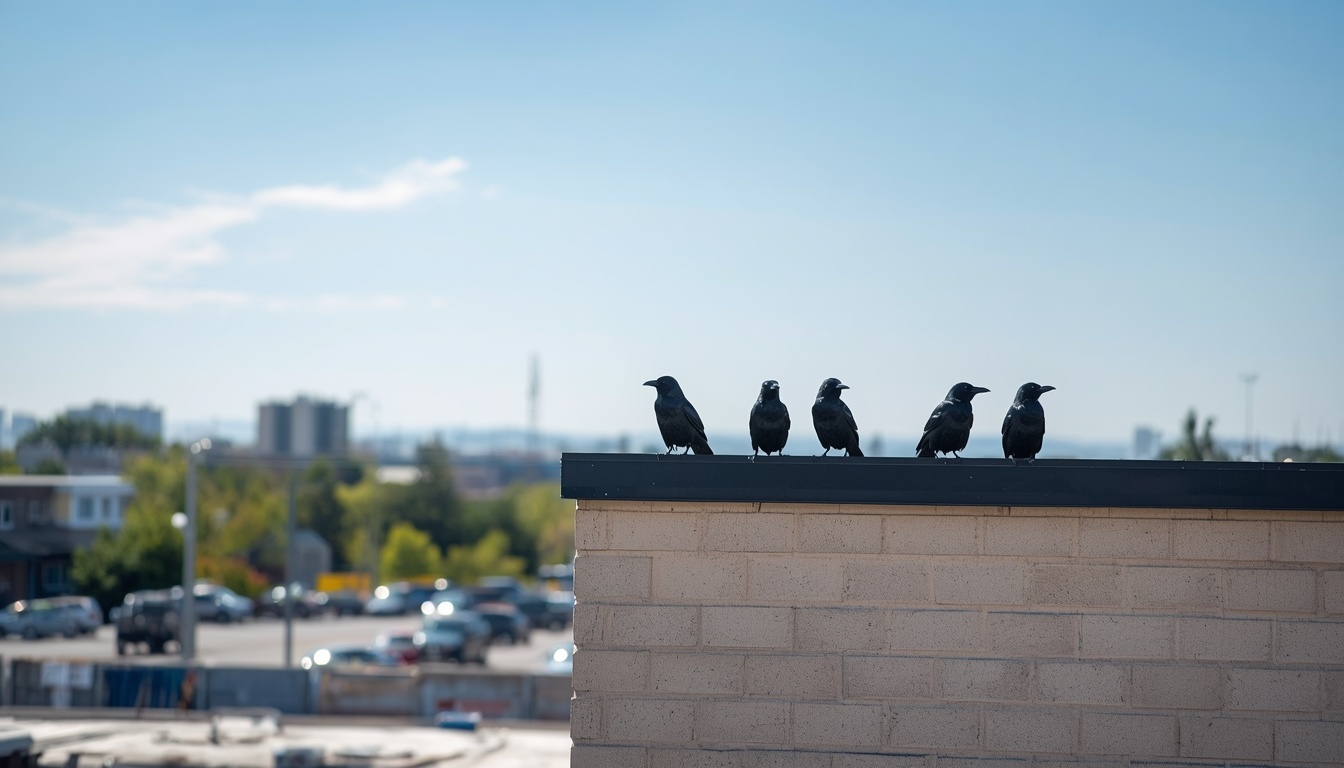

If you've ever watched hundreds, or even thousands, of grackles descend on a facility every evening, you know how quickly they can become a major operational problem.
From excessive bird droppings and noise complaints to contamination concerns and damaged customer perceptions, large grackle flocks create challenges for commercial, industrial, agricultural, and municipal properties alike.
The good news is that grackles don't choose a location randomly.
They return because the property consistently provides the resources they need to survive.
Understanding those resources is the first step toward long-term bird management success.
This guide walks through how to assess grackle roosting habits, identify food sources, and evaluate site conditions that keep large flocks returning year after year.
Successful bird control starts with understanding bird behavior.
Grackles are highly adaptable birds that quickly learn where they can find reliable food, safe shelter, water, and protection from predators.
Once a location consistently provides these resources, the flock often develops a predictable daily routine.
Many facilities focus only on the birds they see.
The better question is:
What is this property providing that makes grackles want to stay?
The answer typically involves a combination of food availability, roosting opportunities, and environmental conditions that support large flock activity.
The first objective during any bird assessment is determining where the flock spends the night.
Large grackle roosts often serve as the center of activity for the entire population.
Conduct inspections:
Observe where birds gather and where they eventually settle for the night.
Common grackle roost locations include:

Many facilities focus on daytime activity while overlooking nighttime roosting locations. In reality, the roost is often the key driver behind recurring bird problems.
Grackles tend to follow highly predictable schedules.
Most large flocks leave the roost in the morning, spend the day feeding and resting, then return to staging areas before settling back into the roost at night.
During your inspection, document:
Creating a simple property map can reveal important movement patterns and help identify where management efforts should be focused.
When birds repeatedly travel the same routes, those pathways often lead directly to attractants that need to be addressed.
Food is one of the strongest reasons grackles continue returning to a site.
These birds are opportunistic feeders and will quickly exploit any reliable food source available.
A thorough food source assessment should include every area of the property where birds may find an easy meal.
Agricultural operations often provide abundant feeding opportunities for grackles.
Inspect for:
Even minor amounts of feed loss can support significant bird activity when available consistently.
The more predictable the food source, the more likely birds are to return daily.
Many commercial properties unknowingly provide food resources that attract large bird populations.
Inspect:
Ask yourself a simple question:
If you were a bird looking for the easiest meal possible, where would you go?
The answer often reveals the source of the problem.
Landscaping features are frequently overlooked during bird inspections.
However, many properties provide natural food sources that support large flocks.
Inspect for:
Healthy landscapes often support insects and other food sources that grackles actively seek.
Food attracts birds.
The environment determines whether they stay.
Properties that provide safety and comfort often become long-term roosting locations.
Grackles prefer locations that offer elevated perches and clear visibility.
Look for:
The ideal roost allows birds to monitor their surroundings while maintaining multiple escape routes from predators.
Water is another major attractant.
Inspect the property for:
Reliable water sources can significantly increase the attractiveness of a property, especially during warmer months.
Large flocks seek locations where they can roost with minimal interference.
Evaluate:
Quiet areas that receive little nighttime activity often become preferred roosting sites.
Large roosts leave behind clear signs of long-term use.
Inspect the property for physical evidence that indicates birds have been using the area consistently.
Bird droppings are one of the most obvious indicators of a roost.
Pay particular attention to:
The heavier the accumulation, the longer birds have likely been using the location.
Established roosts often contain:
These indicators can help confirm long-term bird activity.
One of the easiest ways to identify a large roost is simply by listening.
During late afternoon and evening hours, large grackle flocks often create significant vocal activity as birds gather before settling for the night.
Many facilities attempt bird control without first addressing the conditions attracting birds.
As a result, birds simply relocate temporarily and return later.
Common examples include:
If trees, structures, and shelter remain unchanged, birds often return quickly.
Birds frequently shift to nearby structures when alternative roosting opportunities exist.
As long as food remains available, birds continue receiving a reward for returning.
Without removing attractants, bird pressure often persists.
The most effective bird management programs focus on changing the environment that supports the flock.
Successful programs typically combine several strategies.
Reduce factors that attract birds.
Examples include:
Prevent birds from accessing preferred areas.
Options may include:
Behavioral modification tools can help discourage roosting and feeding activity.
Common approaches include:
Bird behavior changes over time.
Regular monitoring helps identify:
Monitoring allows facility managers to respond before small problems become large infestations.
Large grackle flocks do not choose facilities by accident.
They return because the property consistently provides a combination of food, shelter, water, safety, and routine.
The most successful bird control inspections focus on more than simply counting birds.
They focus on understanding why the birds chose the location in the first place.
When you identify and eliminate the factors driving bird activity, you can break the cycle of repeat returns and create a more effective long-term bird management program.
The question isn't simply, "Where are the birds?"
The better question is:
"What is making this facility attractive to them?"
