Poultry Farms
Bird Flu
Avian Influenza

Most producers look at birds and think feed loss, nuisance, or just part of the environment.
But what gets missed?
Water.
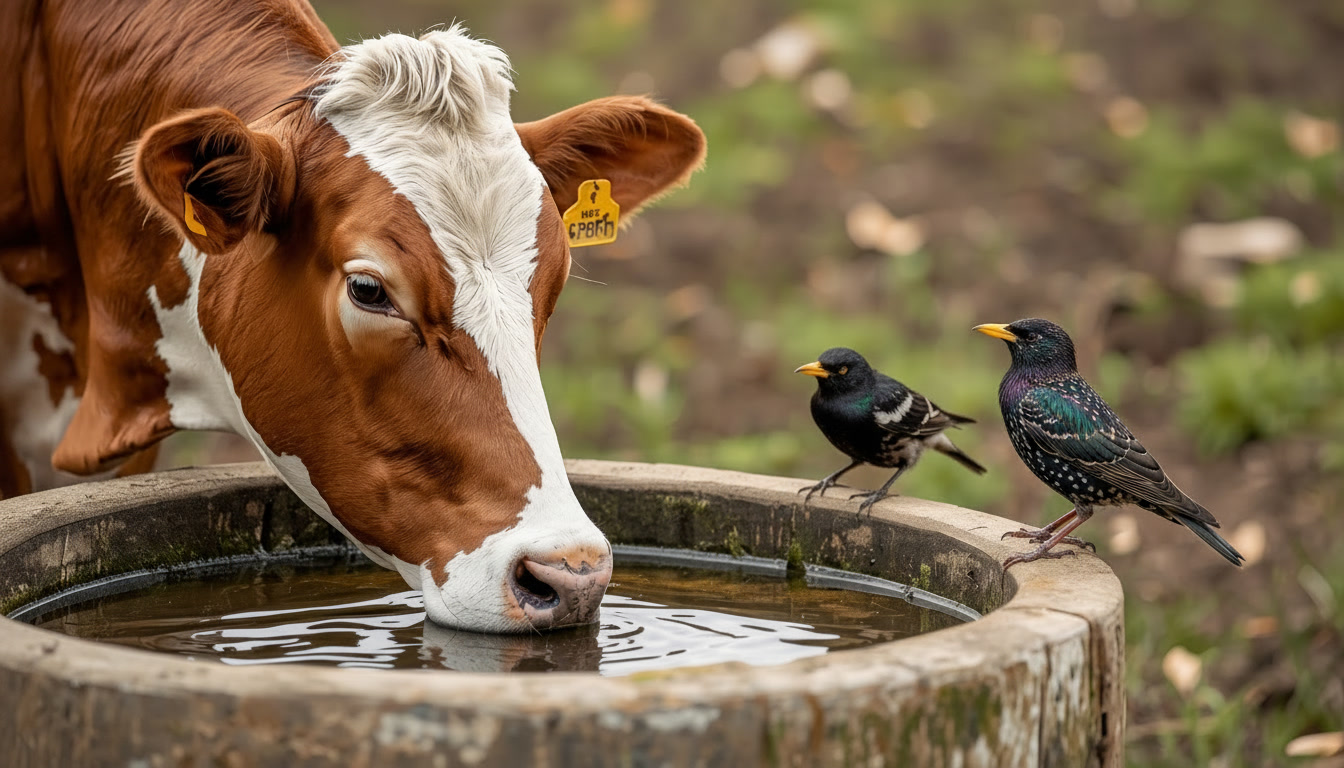
Because birds don’t just show up to eat-they show up, drink, and contaminate the same water your cattle rely on every single day.
And that’s where the real problem starts.
It’s not complicated-and that’s what makes it dangerous.
Birds land on troughs, rails, and edges. They drink. They defecate. They move on.
That contamination doesn’t just sit there-it spreads.
Research shows that pathogens like Salmonella are commonly shed in animal feces and can contaminate water troughs, feed, and surrounding environments once introduced.
And here’s the kicker:
This turns a simple water trough into a distribution system for pathogens.
Let’s cut through the noise. There are a few major players when it comes to bird-related contamination:
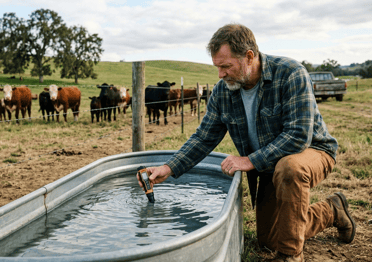
And it’s not just theory.
Birds-especially species like starlings and pigeons-have been shown to physically move contaminated material (like manure) into water and feed sources, spreading pathogens across entire facilities.
Here’s where most people underestimate the impact.
This isn’t just about disease outbreaks-it’s about daily performance loss.
Cattle are extremely sensitive to water quality.
If water is contaminated:
And when intake drops, everything else does too.
Even low-level exposure matters.
You don’t need a full outbreak to take a hit.
All of it adds up to:
This is the part most operations never fully address.
Birds don’t contaminate once-they contaminate daily.
And because some pathogens persist in the environment:
It becomes a continuous loop of pressure on your herd.
There’s a clear pattern across the data:
And importantly:
Even when birds aren’t the original source of a pathogen, they are incredibly effective at spreading it once it exists in the system.
Feed loss gets attention because you can see it.
Water contamination doesn’t-until performance drops.
And by then, it’s already costing you.
Because now you’re dealing with:
All from something that started with a bird sitting on a water trough.
Birds aren’t just a nuisance.
They’re part of your biosecurity equation-especially when it comes to water.
If birds have access to your water sources, you don’t just have a bird problem.
You have a livestock health and performance problem.