Poultry Farms
Bird Flu
Avian Influenza
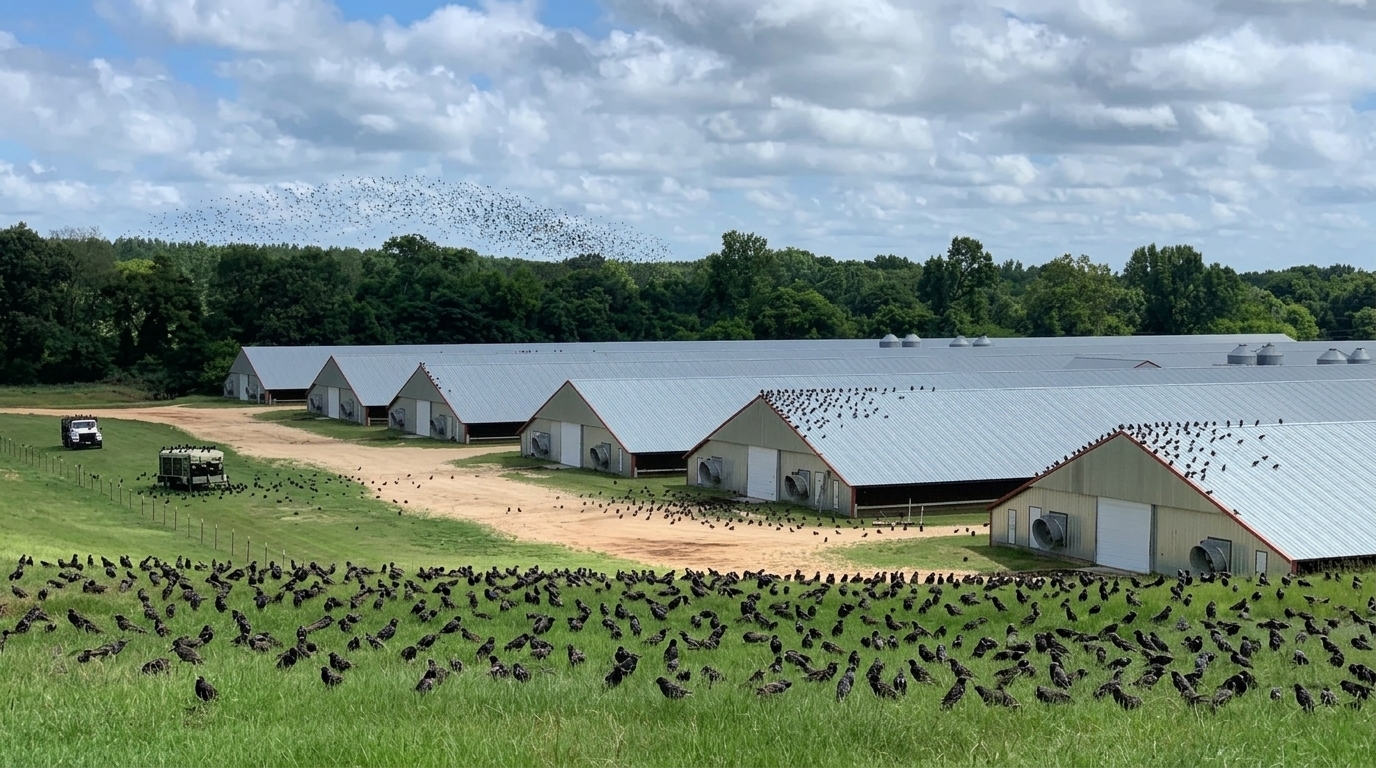

Fall migration is underway, and that means poultry producers need to be paying closer attention to more than just the birds inside their houses.
Wild birds can create a biosecurity risk before they ever get inside a poultry barn.
On September 21, 2026, USDA’s Animal and Plant Health Inspection Service (APHIS) updated its guidance on protecting poultry from wildlife. The recommendations include repairing holes, maintaining screens, installing netting, managing standing water, cleaning up feed spills, covering waste and using methods to deter wild birds from poultry facilities.
That matters because wild birds can carry highly pathogenic avian influenza (HPAI) and other diseases without appearing sick. During migration, infected wild birds can potentially introduce viruses into new areas and expose domestic poultry.
For poultry producers, wildlife management isn't something that sits outside the biosecurity plan. It is part of the plan.
Every fall, millions of wild birds move across North America.
Some are simply passing through. Others stop to feed, rest or find water.
A poultry operation can provide all three.
Feed spills, standing water, open waste containers, damaged screens, holes in buildings and areas where birds can perch can turn a poultry facility into an attractive stop for wildlife.
The problem isn't necessarily that a wild bird needs to enter a poultry house.
It only needs access to the wrong part of the property.
USDA notes that wild birds can carry HPAI without showing signs of illness. That makes visual inspection alone an unreliable way to determine whether a wild bird represents a potential disease risk.
USDA's updated wildlife guidance gives poultry producers several practical steps to reduce wildlife contact.
These include:
None of these recommendations are complicated.
The challenge is that a poultry facility can have dozens of small opportunities for wildlife to gain access or find food and water.
That's why regular inspection matters.
One of the easiest places to find a wildlife attractant is also one of the most overlooked:
Feed.
USDA recommends locating feed structures on clean pads, regularly inspecting pipes and connections for leaks and keeping a broom available at feed storage areas for quick cleanup of spills.
Think about what happens when feed is spilled outside a poultry house.
A few handfuls might not seem significant.
But if birds learn that a particular area consistently provides food, that location can become part of their routine.
And once birds establish a feeding pattern, simply cleaning up one spill may not solve the entire problem.
That's where wildlife management becomes important.
Don't just clean up the attractant. Ask why the birds are there in the first place.
A good wildlife inspection should start by looking at the facility from the bird's perspective.
Where can birds land?
Where can they feed?
Where can they drink?
Where can they nest?
Where can they enter?
Where are they finding shelter?
USDA recommends inspecting building exteriors, perimeter areas and surrounding lands for wildlife attractants and breaches. Its Wildlife Biosecurity Assessments are designed to identify these types of risks and recommend corrective measures.
That means a biosecurity walk shouldn't stop at the poultry-house door.
Walk the entire perimeter.
Look at roofs, rafters, loading areas, feed storage, water sources, waste areas, vegetation and structures where birds are already congregating.
Water is another important part of the equation.
Ponds, basins, drainage areas, leaking pipes and areas where rainwater collects can attract wild birds.
USDA recommends grading properties to prevent pooling water, addressing areas where water remains after rainfall and keeping poultry away from untreated surface water. It also warns against walking or moving equipment through standing water because wildlife feces and other contaminants can potentially be tracked into barns.
This is one reason a poultry biosecurity inspection needs to look beyond the flock itself.
Water management and wildlife management can overlap.
If a pond, drainage area or puddle is attracting birds right next to a poultry house, that deserves attention.
Birds don't need an open barn door to become a problem.
They can use rooflines, ledges, rafters, vents and other elevated structures as resting or nesting locations.
USDA recommends repairing holes, maintaining screens and installing netting where appropriate. It also recommends using deterrents to discourage birds from perching.
This is where a facility inspection can reveal problems that aren't obvious from ground level.
Look up.
If you see birds repeatedly using the same part of the building, you've found something worth investigating.
Once attractants and access points have been identified, the next question is:
How do you keep birds away?
USDA recommends an integrated wildlife management approach. Its guidance lists options including netting, screens, repellent gel, bird spikes, decoys and scare devices, while noting that some wildlife-management activities require specialized expertise or permits.
The important point is that there isn't always one solution.
A poultry operation may need to address several different bird behaviors at the same time:
Feeding.
Perching.
Nesting.
Roosting.
Water access.
Building access.
The right strategy depends on the species, location, behavior and facility.
This is one of the most important developments for poultry producers right now.
USDA is offering free, voluntary Wildlife Biosecurity Assessments to commercial poultry operations that have not been affected by HPAI. APHIS Wildlife Services staff can visit a facility, identify wildlife-related risks and recommend facility repairs and wildlife-management strategies.
USDA says the assessment is not intended to be a one-time service. It can involve ongoing engagement between Wildlife Services staff and facility owners or managers to strengthen wildlife-risk mitigation over time.
USDA also says eligible commercial poultry producers may receive up to 75% cost sharing for addressing the highest-risk biosecurity concerns identified through the assessments.
For poultry operators, that's worth knowing about.
Biosecurity is often associated with boots, clothing, equipment, visitors and cleaning protocols.
Those things matter.
But USDA's current guidance makes another point clear:
The wildlife around the facility matters too.
A poultry operation can have excellent internal procedures and still have wildlife attractants sitting outside the barn.
Spilled feed.
Standing water.
Open waste.
Damaged screens.
Unprotected openings.
Birds roosting above areas where poultry and workers move.
These are all reasons to look at the entire property.
Before migration activity increases, walk the property and ask:
Look for spilled grain, feed around equipment and other food sources.
Check ponds, basins, puddles, leaking pipes and drainage areas.
Look at rooflines, ledges, rafters, equipment and utility structures.
Check building openings, vents, insulation and sheltered areas.
Inspect screens, doors, vents, roof openings and damaged building materials.
Make sure carcasses, compost and garbage are properly covered and secured.
If they are, don't just chase them away.
Find out why that location is attractive to them.
The goal of biosecurity isn't to respond after a problem appears.
It's to reduce opportunities for disease introduction before that happens.
USDA's current guidance emphasizes prevention, including reducing wildlife contact, removing food and water attractants and closing potential access points.
And because wild birds can carry HPAI without showing obvious signs of illness, waiting for a bird to "look sick" isn't a reliable wildlife-management strategy.
The time to find the hole in your biosecurity plan is before something gets through it.
Bird control isn't simply about getting rid of birds that are annoying.
On agricultural operations, bird management can be part of a larger effort to protect feed, equipment, facilities and flock health.
The first step is identifying the problem:
What species are you dealing with?
Where are they feeding?
Where are they roosting?
What is attracting them?
How are they accessing the property?
From there, a wildlife-management strategy can be built around the specific site.
For poultry producers, that means bird control should be considered alongside the rest of the farm's biosecurity practices—not as an afterthought.
Migration doesn't wait for a biosecurity plan to be finished.
Birds are already moving.
And if your poultry operation has spilled feed, standing water, open waste, building gaps or established bird activity, now is the time to find it.
Walk the property. Look up. Check the feed areas. Check the water. Check the openings.
Because your bird-flu biosecurity plan can be strong on paper and still have a weakness right outside the barn.
Avitrol helps agricultural and commercial operations identify bird pressure and develop bird-management strategies around the specific conditions at the site.
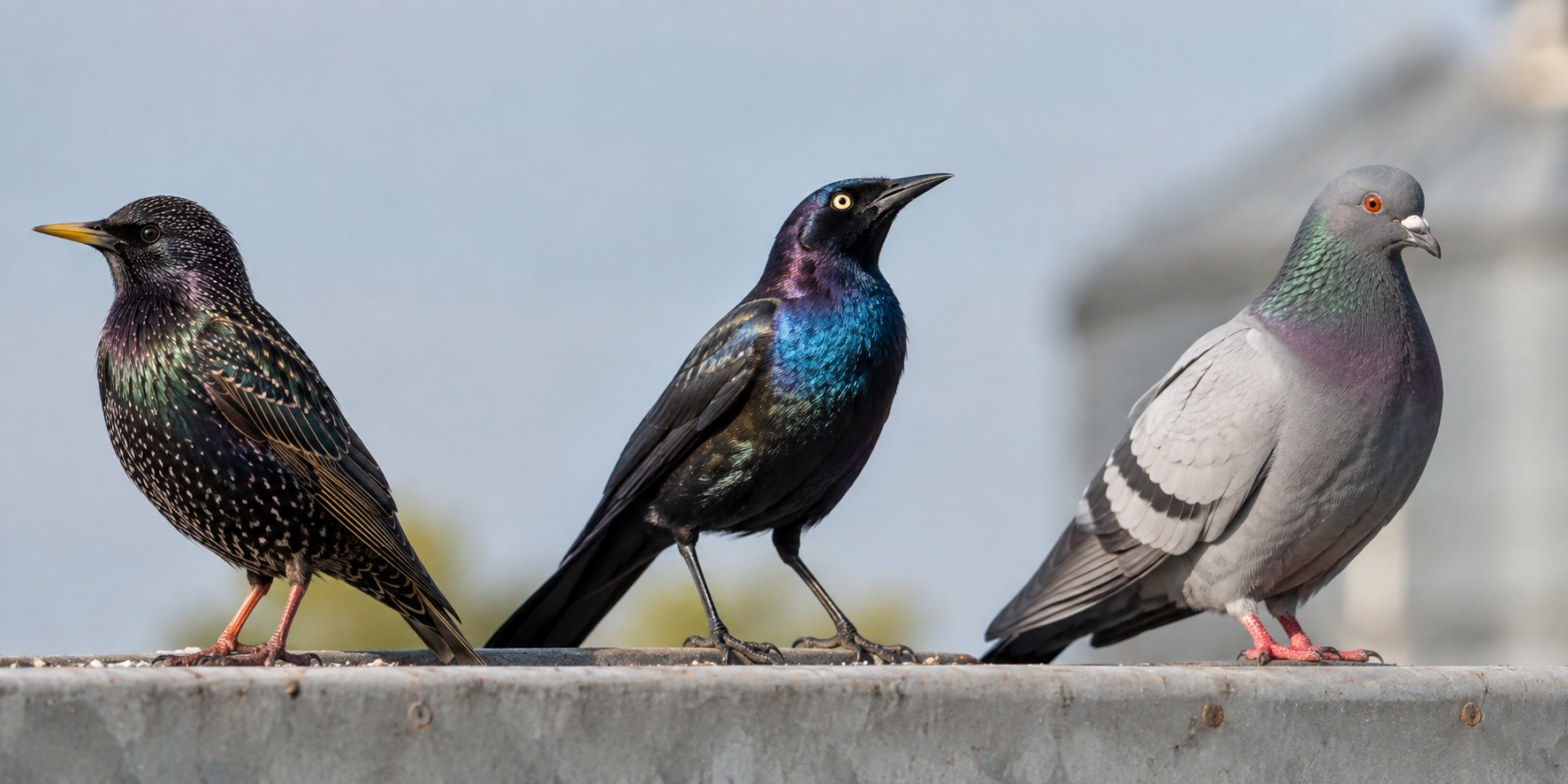
If you're seeing starlings, blackbirds, sparrows, pigeons or other pest birds around your operation, talk to Avitrol about what you're seeing and where you're seeing it.
The sooner you identify the attractant and the bird behavior, the more options you have for managing the problem.